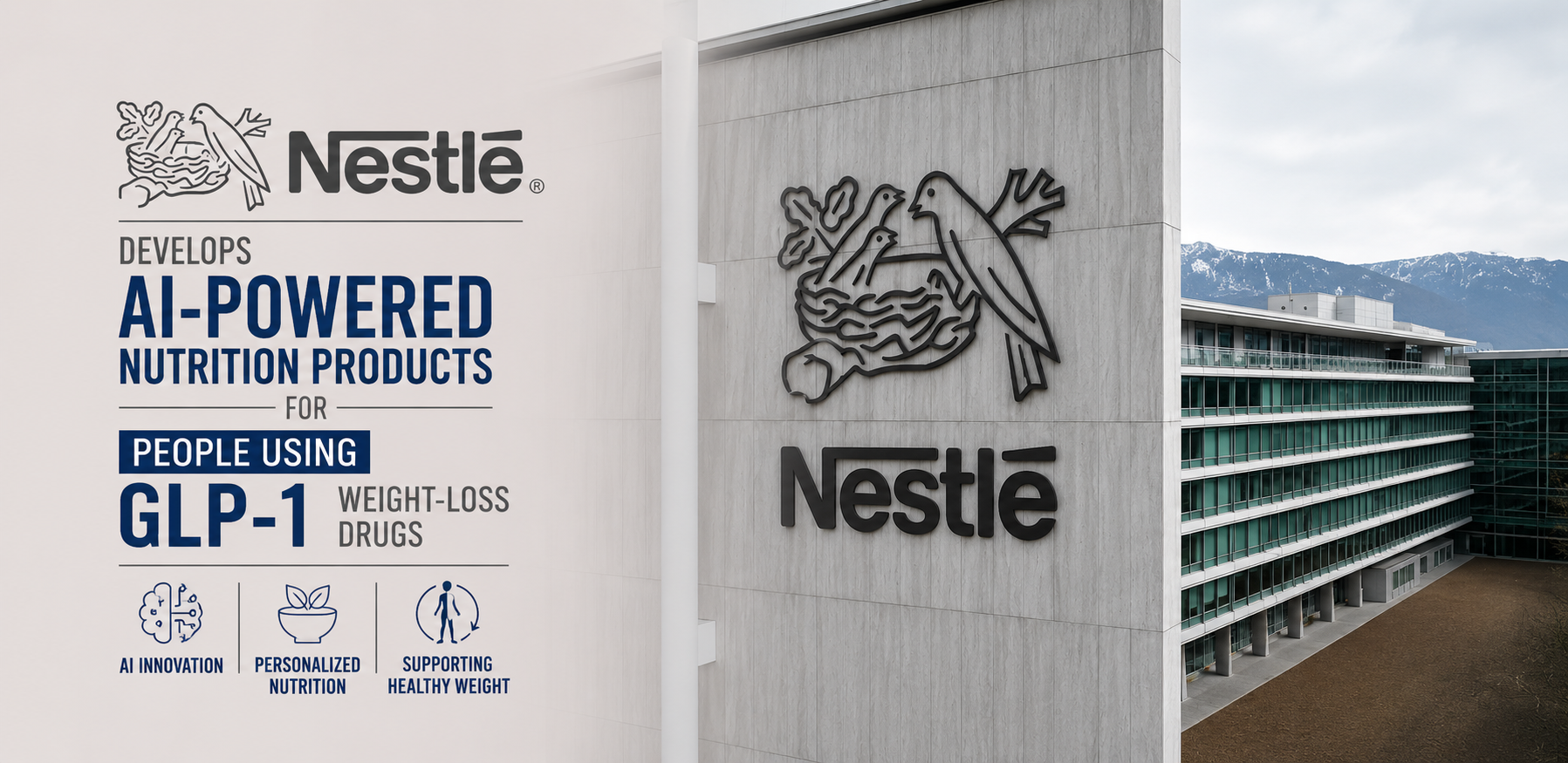
Nestlé Develops AI-Powered Nutrition Products for People Using GLP-1 Weight-Loss Drugs
What's Happening
Nestlé is expanding its nutrition portfolio to serve the growing number of people taking GLP-1 weight-loss medications such as Ozempic, Wegovy, Mounjaro, and Zepbound.
The company is using artificial intelligence (AI) and nutritional science to develop products designed to address common side effects associated with rapid weight loss, including muscle loss, reduced protein intake, and the facial fat loss often referred to as "Ozempic face." Nestlé says it sees the trend not as a threat to food sales, but as an opportunity to create a new category of nutrition products tailored to GLP-1 users.
Why Nestlé Is Investing in GLP-1 Nutrition
GLP-1 medications suppress appetite and can lead to rapid weight loss. While these medicines have transformed obesity treatment, they can also contribute to loss of lean muscle mass, reduced protein and nutrient intake, dehydration, and skin and facial fat loss. Nestlé says it is studying these effects to develop foods and nutritional products that better support people during and after weight-loss treatment.
Products Being Developed
Nestlé has already introduced or expanded several products targeting the needs of GLP-1 users, including:
- Boost Advanced Nutrition Shake: Contains 35 grams of protein to help support muscle health during weight loss.
- Vital Proteins: Products enhanced with collagen to support skin, hair, and nail health.
- Milo PRO High Protein: A higher-protein version of its malt beverage available in selected international markets.
The company also says it has developed proprietary combinations of micronutrients designed to support muscle recovery and is researching ingredients that may help manage increased hunger after patients stop taking GLP-1 medications.
How AI Is Driving Product Development
Nestlé is increasingly relying on AI to accelerate nutrition research. Its internal AI platform, Food Genie, helps scientists analyze large volumes of clinical research, evaluate approximately 120,000 recipes, predict consumer preferences, identify nutrient combinations for muscle health and hydration, and detect emerging health and nutrition trends through social media analysis.
Industry Impact
- Food and Nutrition Companies: The rapid adoption of GLP-1 medicines is creating demand for products that help patients maintain adequate nutrition while losing weight.
- Healthcare Providers: Physicians and dietitians continue emphasizing the importance of sufficient protein, hydration, and balanced nutrition for patients taking GLP-1 therapies.
- Consumers: People using weight-loss medications may see a wider range of specialized nutritional products designed to support muscle health and overall wellness during treatment.
- Healthcare and Nutrition Market: The growing use of GLP-1 therapies is creating new opportunities for collaboration between pharmaceutical companies, nutrition brands, and healthcare providers.
Looking Ahead
Nestlé plans to continue expanding its GLP-1-focused nutrition portfolio as adoption of obesity medications grows. The company will use AI, clinical research, and consumer insights to develop additional products that address nutritional needs throughout the weight-loss journey. While some nutrition experts argue that similar nutrients can be obtained from conventional whole foods, they acknowledge that demand for specialized products is likely to increase as GLP-1 use expands.
Why This Matters
GLP-1 medications are reshaping not only obesity treatment but also consumer nutrition and healthcare. As millions of Americans adopt these therapies, companies are increasingly developing products that support long-term health during treatment. The trend reflects a broader shift toward personalized nutrition that complements medical care rather than simply promoting weight loss.
Key Takeaways
- Nestlé is developing nutrition products specifically for people using GLP-1 weight-loss drugs.
- The company is using AI and nutritional science to address side effects such as muscle loss and reduced protein intake.
- About 16 million Americans are currently taking GLP-1 medications, creating a rapidly growing market.
- Nestlé has already launched high-protein and collagen-based products targeting GLP-1 users.
- The initiative reflects the growing convergence of nutrition, healthcare, and obesity management.
What This Means for Healthcare Marketers
Nestlé's strategy demonstrates how the rapid adoption of GLP-1 therapies is influencing nutrition, preventive health, and chronic disease management beyond the pharmaceutical industry. Food manufacturers, healthcare providers, nutrition companies, digital health platforms, and obesity care organizations are increasingly developing products and services tailored to patients using these medications. For healthcare marketers, organizations involved in obesity care, nutrition, metabolic health, digital health, and patient support represent high-intent opportunities for education, product innovation, strategic partnerships, and patient engagement.