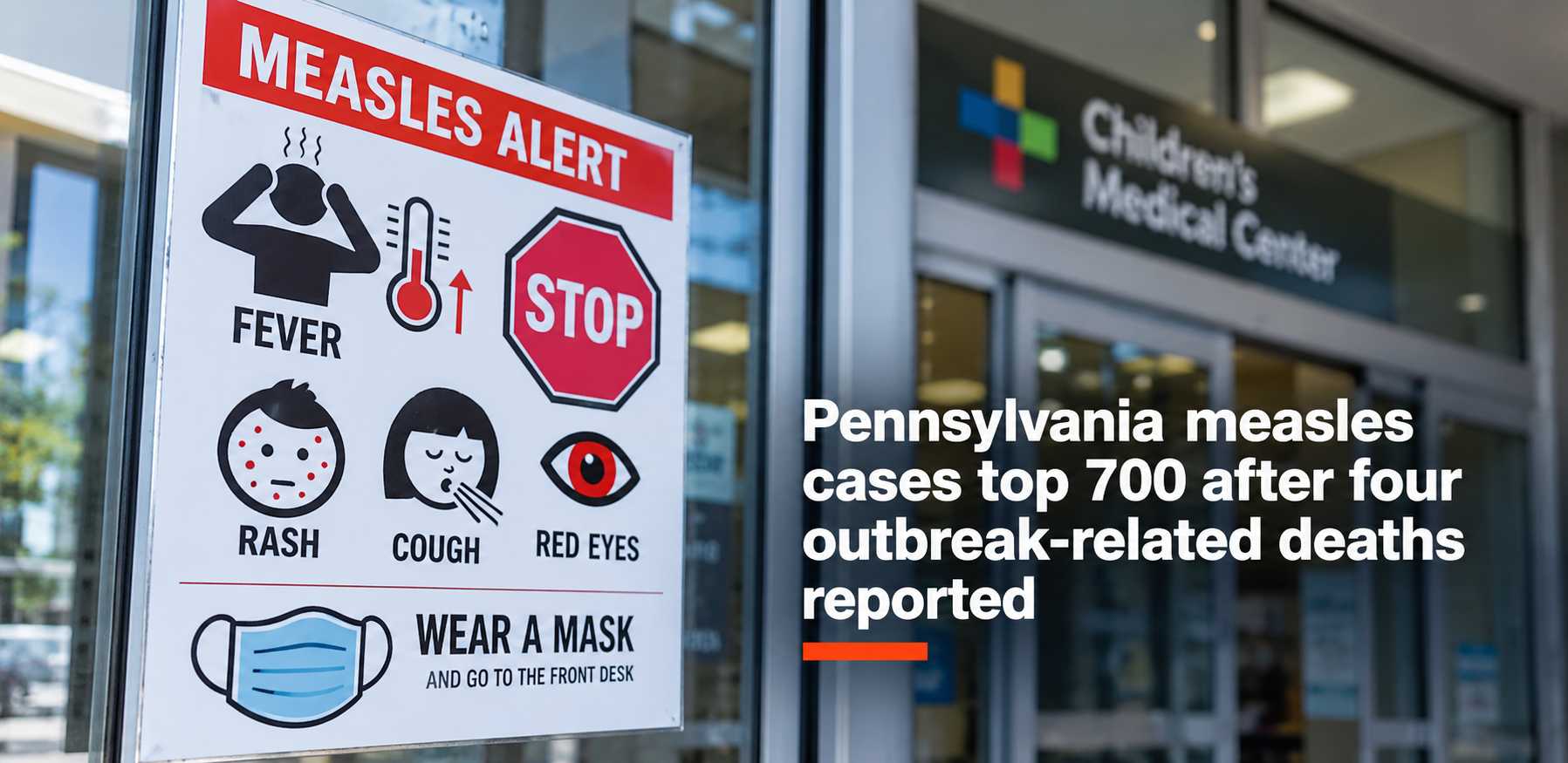
What's Happening
Pennsylvania's ongoing measles surge has reached 731 confirmed cases and 141 hospitalizations, following the state's confirmation of four outbreak-associated deaths among unvaccinated individuals. (Reuters)
Public health departments are scaling up immunization campaigns and targeted outreach as the state remains the epicenter of one of the largest national measles resurgences in decades. (Investing.com)
Pennsylvania Remains the Center of the Outbreak
Lancaster County bears the heaviest infection burden amidst rapid statewide spread
With cases climbing steadily across multiple counties, localized transmission in hot spots like Lancaster continues to drive intensive community-level intervention and mobile vaccination efforts. (Investing.com)
Hospitalizations Are Also Increasing
Severe complications place heavy operational burdens on local health systems
The state's 141 recorded hospitalizations reflect severe respiratory and neurological risks associated with the virus, demanding rigorous isolation protocols and emergency capacity management. (Investing.com)
Four Deaths Have Now Been Reported
Fatalities spark scrutiny over classification methodologies and vaccination status
All four reported deaths—including recent additions in Jefferson and Mifflin counties—involved unvaccinated patients where epidemiological reviews confirmed measles as a direct contributing factor. (Reuters)
The Death Count Differs From Federal Reporting
Discrepancies emerge between state health authorities and federal CDC trackers
While Pennsylvania maintains its four-death count, federal tallies exclude these figures pending an ongoing CDC reevaluation of national measles mortality classification standards. (Investing.com)
The National Outbreak Is Also Expanding
U.S. case counts surpass prior-year totals amid widespread transmission
National data through mid-September recorded 3,294 cases, with 95% linked directly to active outbreaks, confirming that the country is facing sustained community transmission rather than isolated incidents. (Investing.com)
Lancaster County Remains the Hardest Hit
Concentrated susceptibility highlights risks of localized immunity gaps
Broad statewide averages can obscure vulnerable pockets where low vaccination coverage accelerates outbreaks, making hyper-local outreach essential for interrupting transmission chains. (Investing.com)
Why Vaccination Matters
High MMR efficacy provides robust defense against highly contagious viral vectors
Because measles is exceptionally contagious, maintaining community-wide protection requires high vaccination rates, given that the two-dose MMR regimen offers roughly 97% protection. (Investing.com)
The Outbreak Is Creating Additional Public-Health Work
Comprehensive containment efforts strain municipal and state resources
Health departments are heavily strained managing case investigations, tracking contact exposures, reviewing immunization records, and coordinating clinical infection-control measures.
The Current Outbreak Is Also a Vaccine-Confidence Issue
Declining public trust coincides with falling childhood immunization rates
Polling data shows public belief in MMR safety has dropped from 84% in 2020 to 76% in 2026, aligning with kindergarten coverage falling below the 95% threshold required for community immunity. (Reuters)
The Healthcare System Impact
Multi-layered demands affect hospitals, pediatric practices, and retail pharmacies
Clinics face surges in appointment requests and vaccine inquiries, while hospitals must maintain strict isolation infrastructure and infection-control workflows.
Why Accurate Surveillance Matters
Consistent data frameworks are crucial for optimal resource allocation and planning
Reliable tracking of hospitalizations, mortality, and case distribution enables health systems and government agencies to deploy medical assets where they are most urgently needed.
What Pennsylvania Is Doing
Intensified immunization drives target vulnerable community clusters
State officials continue deploying targeted vaccination campaigns and public health advisories to curb rapid transmission and protect susceptible populations. (Investing.com)
Why This Matters
Pennsylvania's escalating outbreak underscores the systemic pressures infectious disease resurgences place on healthcare infrastructure, public health capacity, and data surveillance systems. (Investing.com)
Looking Ahead
Monitoring ongoing transmission trends and impending federal classification updates
Future trajectory depends heavily on catch-up vaccination uptake, community engagement, and how federal agencies resolve mortality reporting definitions. (Investing.com)
Key Takeaways
- Pennsylvania confirmed 731 measles cases and 141 hospitalizations as of September 16, 2026. (Investing.com)
- Four outbreak-associated deaths have been reported, all involving unvaccinated individuals. (Reuters)
- Lancaster County remains the most heavily impacted area in the state. (Investing.com)
- Nationwide U.S. cases reached 3,294 through September 10, 2026. (Investing.com)
- Federal CDC tallies temporarily exclude Pennsylvania's deaths pending classification reviews. (Investing.com)
- Two-dose MMR vaccine efficacy remains approximately 97%. (Investing.com)
- State health departments are actively expanding localized immunization and outreach initiatives. (Investing.com)
- Outbreak activity coincides with declining public confidence in childhood vaccines. (Reuters)
What This Means for Healthcare Marketers
The outbreak demonstrates why healthcare organizations need to monitor disease activity, healthcare utilization and public sentiment together.
For vaccine manufacturers, pharmacies, health systems and public-health organizations, relevant signals include case growth, hospitalization rates, vaccination coverage, geographic concentration and demand for immunization services.
These signals can help identify where healthcare demand is increasing and where targeted patient or community outreach may become more important.
For healthcare intelligence teams, combining epidemiological data with behavioral signals such as vaccine confidence can provide a more complete view of where intervention needs are developing.