ResMed Shares Fall as Weak 2027 Sales Forecast Overshadows Quarterly Profit Beat
What's Happening
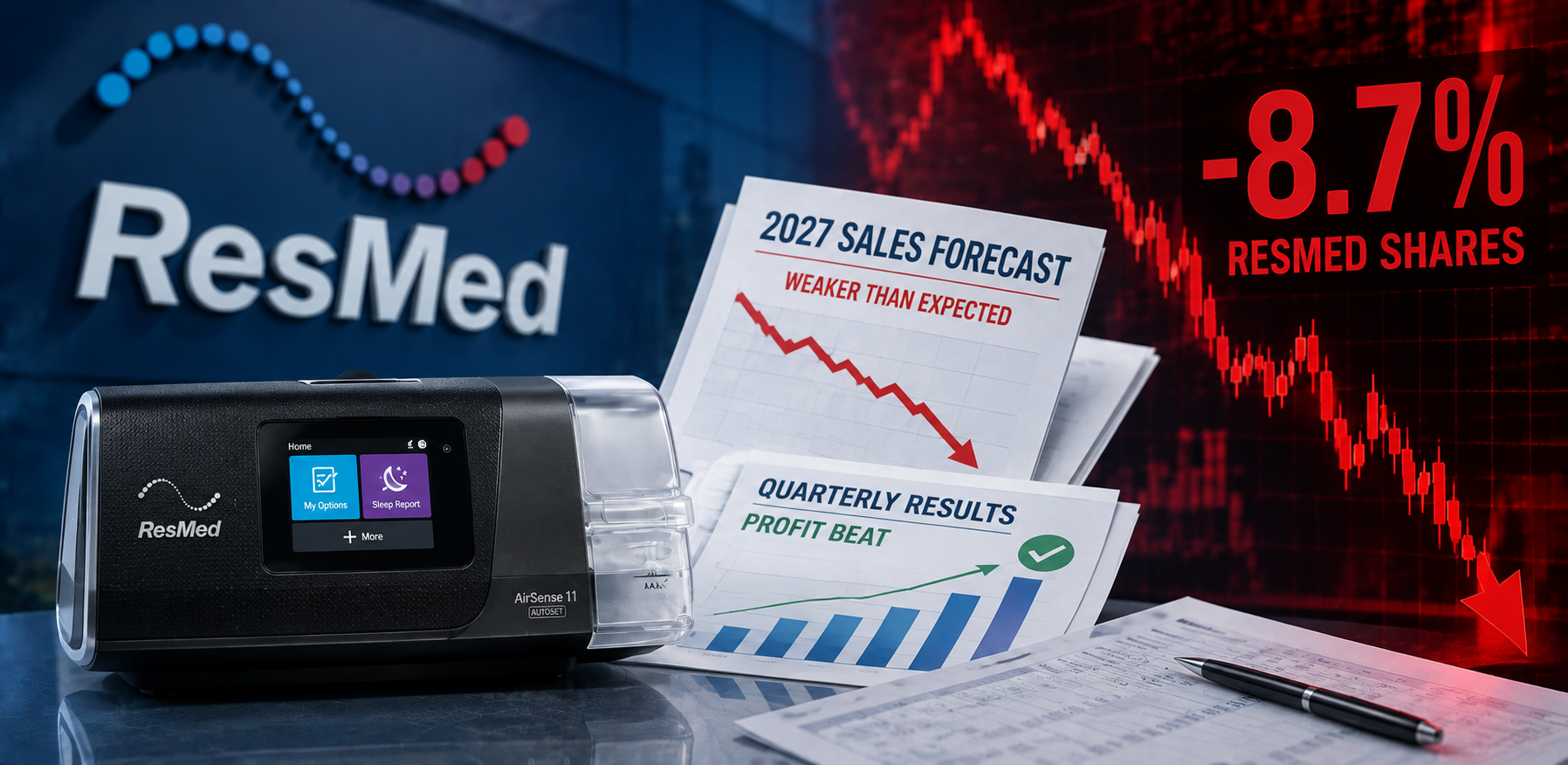
ResMed's shares fell after the medical device company reported better-than-expected quarterly profit but issued a weaker-than-anticipated sales outlook for fiscal 2027.
While the maker of sleep apnea devices exceeded Wall Street's profit expectations through continued operational efficiency and steady demand for its products, investors focused on slower projected revenue growth for the coming year. The softer outlook overshadowed the company's strong quarterly performance and led to a decline in its share price.
Despite the market reaction, ResMed continues to expect long-term demand for its sleep and respiratory care products as awareness and diagnosis of sleep disorders continue to increase worldwide.
Understanding ResMed's Business
ResMed is a global medical technology company specializing in products used to diagnose and treat sleep disorders and chronic respiratory diseases.
Its portfolio includes:
- CPAP machines for sleep apnea.
- Masks and accessories.
- Home ventilation systems.
- Digital health platforms.
- Remote patient monitoring solutions.
- Software for out-of-hospital care providers.
The company also provides cloud-based tools that help clinicians monitor patients receiving therapy at home.
Why Investors Reacted
Although ResMed delivered stronger-than-expected profits, investors were concerned about its outlook for future sales growth.
Several factors are influencing expectations, including:
- Slower anticipated revenue growth.
- Competitive market conditions.
- Pricing pressures.
- Changes in product demand.
- Ongoing investments in innovation.
The results highlight how future growth projections can have a greater impact on investor sentiment than short-term earnings performance.
Industry Impact
- Medical Device Companies: The results demonstrate the importance of balancing strong financial performance with sustained long-term growth expectations.
- Healthcare Providers: Sleep specialists and respiratory care providers continue relying on ResMed's devices to manage patients with sleep apnea and chronic respiratory conditions.
- Patients: Continued investment in connected respiratory care technologies is expected to improve long-term patient monitoring and treatment adherence.
- Investors: The market reaction highlights continued focus on future revenue growth as companies navigate changing healthcare market conditions.
Looking Ahead
ResMed plans to continue investing in digital health, connected care technologies, and next-generation sleep therapy devices.
The company expects long-term demand for sleep apnea treatment to remain strong as diagnosis rates increase and healthcare providers continue expanding home-based care.
Future product launches and digital health initiatives will remain central to the company's long-term growth strategy.
Why This Matters
Sleep apnea affects millions of people worldwide and remains significantly underdiagnosed.
Companies like ResMed play an important role in expanding access to diagnosis, treatment, and remote patient monitoring for chronic sleep and respiratory disorders.
The company's continued investment in connected healthcare technologies reflects broader trends toward home-based care and digital health integration.
Key Takeaways
- ResMed reported stronger-than-expected quarterly profit but issued a weaker sales forecast for fiscal 2027.
- Investors focused on slower projected revenue growth, causing the company's shares to decline.
- ResMed continues investing in sleep apnea devices, respiratory care, and digital health technologies.
- Long-term demand for sleep disorder treatment remains strong despite near-term market concerns.
- Connected care and remote patient monitoring remain key areas of growth for the company.
What This Means for Healthcare Marketers
ResMed's results highlight continued investment in sleep medicine, respiratory care, connected medical devices, and digital health. Medical device manufacturers, sleep clinics, respiratory care providers, and home healthcare organizations continue expanding technologies that improve diagnosis, treatment, and remote patient monitoring. For healthcare marketers, organizations involved in sleep health, respiratory care, MedTech, and digital healthcare represent high-intent opportunities for provider education, partnership development, patient engagement, and commercial growth.