
Scholar Rock Revises FDA Filing for Muscle Weakness Drug After Removing Catalent Manufacturing Site
What's Happening
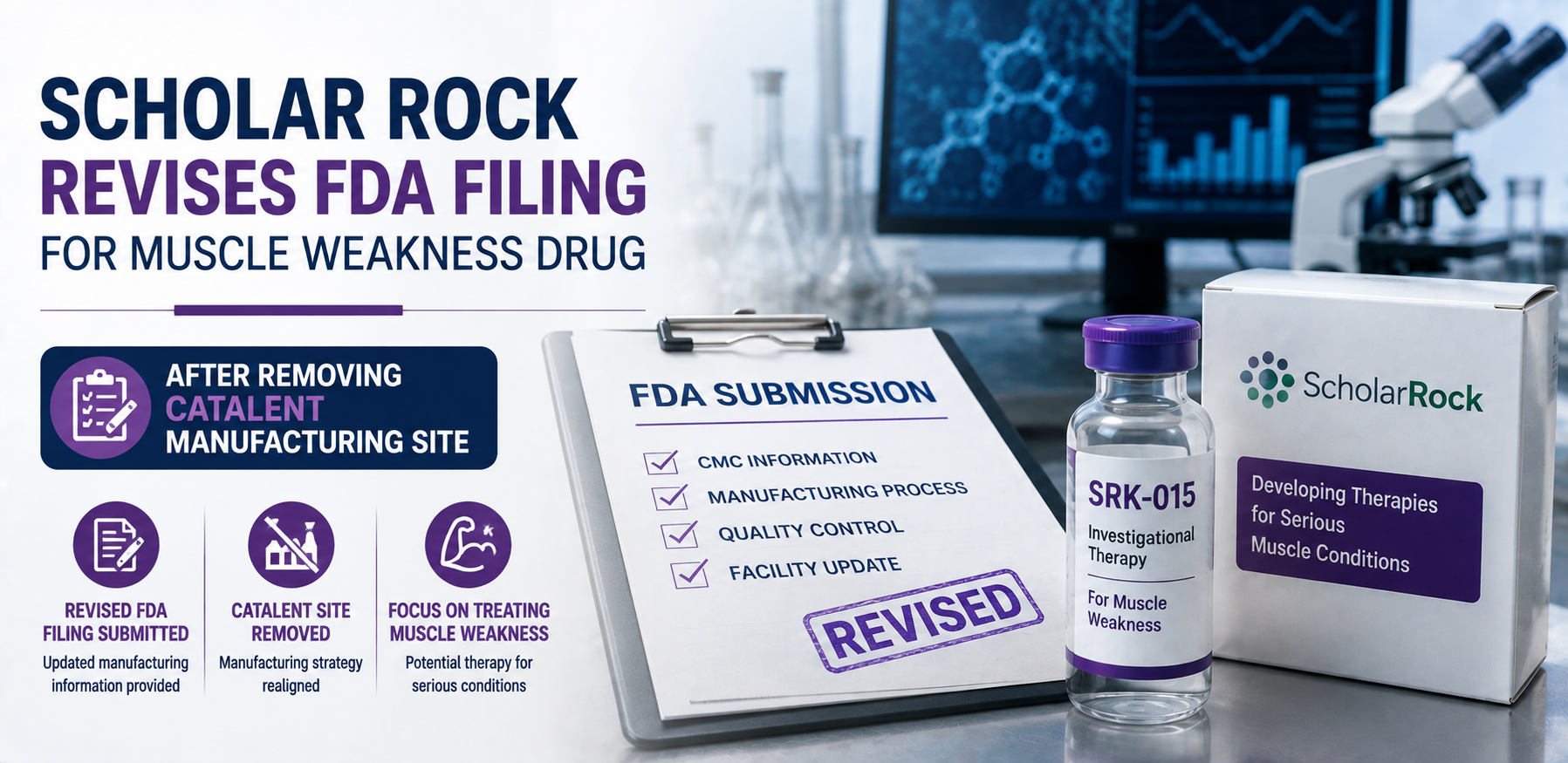
Scholar Rock has updated its U.S. Food and Drug Administration (FDA) marketing application for its experimental muscle weakness treatment after removing a Catalent manufacturing facility from the submission.
The biotechnology company said the decision was made to simplify the regulatory review process and was not related to the safety, efficacy, or quality of the drug itself. Scholar Rock continues to expect the FDA to complete its review within the previously established timeline.
The investigational therapy is being developed to treat spinal muscular atrophy (SMA), a rare genetic disorder that causes progressive muscle weakness and loss of motor function.
Understanding Spinal Muscular Atrophy
Spinal muscular atrophy (SMA) is a rare inherited neuromuscular disease that affects the nerve cells responsible for controlling voluntary muscle movement.
Symptoms can include:
- Progressive muscle weakness.
- Difficulty walking.
- Reduced mobility.
- Problems with swallowing.
- Breathing difficulties in severe cases.
While several treatments are available, researchers continue developing new therapies aimed at improving muscle strength and physical function for patients living with the disease.
Why the Filing Was Updated
Manufacturing information is a critical part of every FDA marketing application.
Scholar Rock removed one Catalent manufacturing site from its filing to streamline the review process while continuing to use other approved manufacturing facilities.
The company emphasized that:
- The clinical trial data remains unchanged.
- The FDA review timeline is unaffected.
- The change is unrelated to product safety or effectiveness.
- Manufacturing plans continue to support potential commercialization.
The update demonstrates how pharmaceutical companies often refine regulatory submissions to help facilitate approval reviews.
Industry Impact
- Biotechnology Companies: The announcement highlights the importance of manufacturing readiness and regulatory strategy as companies prepare innovative therapies for commercialization.
- Contract Manufacturing Organizations: The decision underscores the critical role manufacturing partners play in supporting drug development and regulatory approval.
- Healthcare Providers: Neurologists and specialists treating spinal muscular atrophy continue monitoring new therapies that may expand treatment options for patients.
- Patients: Individuals living with SMA may still have access to a potential new treatment if the FDA review proceeds successfully.
Looking Ahead
Scholar Rock continues working toward FDA approval while preparing for potential commercial launch if the therapy receives regulatory clearance.
The FDA is expected to complete its review according to the previously announced timeline, and the company remains focused on bringing the treatment to eligible patients.
The outcome could further expand available therapies for spinal muscular atrophy and strengthen innovation in rare disease treatment.
Why This Matters
Manufacturing quality and regulatory compliance are essential parts of every drug approval process.
Scholar Rock's filing update illustrates how companies can make operational changes during regulatory review without affecting the underlying clinical evidence supporting a medicine.
The case also reflects continued investment in therapies for rare neuromuscular diseases, where significant unmet medical needs remain.
Key Takeaways
- Scholar Rock updated its FDA marketing application after removing a Catalent manufacturing facility from the submission.
- The change does not affect the drug's clinical data, safety, or expected FDA review timeline.
- The experimental therapy is being developed for spinal muscular atrophy.
- Manufacturing strategy remains an important part of the drug approval process.
- The company continues preparing for potential FDA approval and commercialization.
What This Means for Healthcare Marketers
Scholar Rock's regulatory update highlights continued investment in rare diseases, neuromuscular disorders, biotechnology innovation, and pharmaceutical manufacturing. Biotechnology companies, contract manufacturing organizations, specialty pharmacies, and neurology providers continue advancing therapies for patients with rare genetic conditions. For healthcare marketers, organizations involved in rare diseases, specialty pharmaceuticals, contract manufacturing, and regulatory affairs represent high-intent opportunities for physician education, medical affairs initiatives, partnership development, and commercial growth.