Sweetgreen Cuts Forecast as Cyclosporiasis Outbreak Weighs on Business
What's Happening
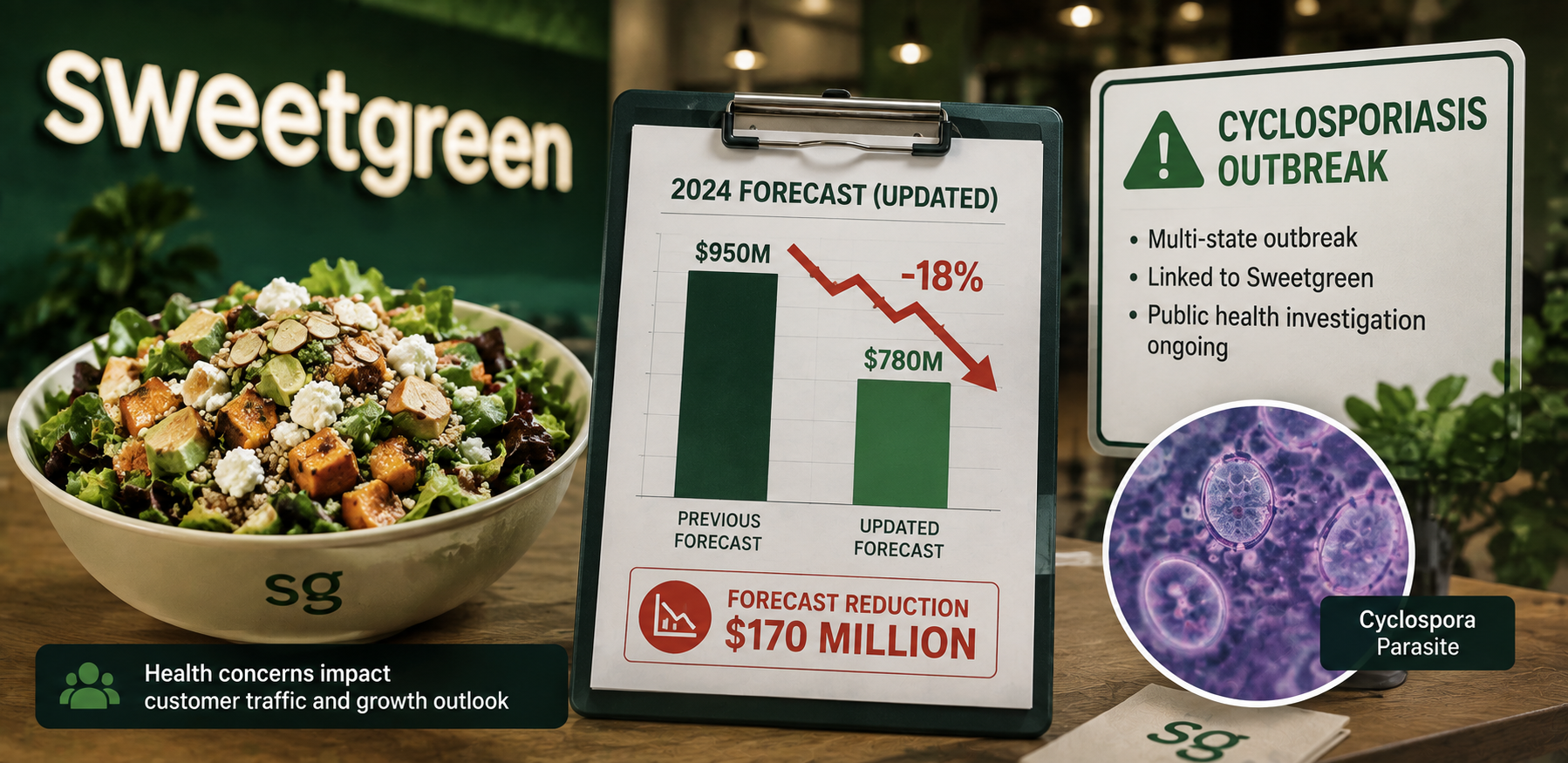
Sweetgreen has lowered its financial outlook after concerns surrounding the ongoing cyclosporiasis outbreak affected customer demand, sending the restaurant chain's shares lower.
Although health officials have not concluded that Sweetgreen caused the outbreak, the company said consumer concerns about food safety have weighed on sales. The restaurant chain has responded by strengthening food safety measures, working closely with suppliers, and cooperating with public health authorities as investigations continue.
The announcement highlights how foodborne illness outbreaks can significantly affect restaurant operators, even before investigations are fully completed.
Understanding Cyclosporiasis
Cyclosporiasis is a foodborne illness caused by the parasite Cyclospora cayetanensis.
People typically become infected after consuming contaminated fresh produce, including:
- Leafy greens.
- Fresh herbs.
- Salad vegetables.
- Berries.
- Other uncooked fruits and vegetables.
Common symptoms include:
- Persistent diarrhea.
- Stomach cramps.
- Nausea.
- Fatigue.
- Loss of appetite.
- Weight loss.
The illness can last for several weeks if left untreated.
Why Sweetgreen Lowered Its Forecast
The company said uncertainty surrounding the outbreak has reduced customer traffic and affected sales expectations.
Food safety incidents can impact restaurant businesses through:
- Lower customer confidence.
- Reduced restaurant visits.
- Increased food safety costs.
- Supply chain disruptions.
- Additional quality assurance measures.
Although the investigation remains ongoing, the outbreak has already created financial uncertainty for companies operating in the fresh food sector.
Industry Impact
- Restaurant Industry: The incident highlights the importance of food safety, supplier oversight, and rapid response when contamination concerns arise.
- Food Suppliers: Growers and distributors of fresh produce may face increased inspections and traceability reviews as investigators identify the contamination source.
- Public Health Agencies: Health officials continue investigating the outbreak while monitoring additional cases and working to prevent further illnesses.
- Investors: The decline in Sweetgreen's shares demonstrates how public health events can quickly influence investor confidence and company performance.
Looking Ahead
Sweetgreen plans to continue strengthening food safety practices while working with suppliers and public health officials throughout the investigation.
The company is expected to closely monitor consumer demand and adjust operations as more information becomes available about the outbreak.
The findings may also encourage broader investments in food traceability, supplier monitoring, and quality assurance across the restaurant industry.
Why This Matters
Foodborne illness outbreaks can have significant consequences beyond public health, affecting consumer confidence, restaurant operations, and financial performance.
Sweetgreen's revised outlook demonstrates how closely food safety and business performance are connected, particularly for restaurants that rely heavily on fresh produce.
The situation also reinforces the importance of strong food safety systems, supply chain transparency, and rapid outbreak response.
Key Takeaways
- Sweetgreen lowered its financial forecast as concerns surrounding the cyclosporiasis outbreak affected customer demand.
- The company continues cooperating with public health authorities during the investigation.
- Consumer confidence and food safety play a major role in restaurant performance.
- Foodborne illness outbreaks can significantly affect both public health and business operations.
- The incident highlights the importance of food safety, supply chain traceability, and rapid public health response.
What This Means for Healthcare Marketers
The outbreak highlights continued investment in food safety, infectious disease surveillance, laboratory diagnostics, and public health infrastructure. Public health agencies, diagnostic laboratories, food safety organizations, healthcare providers, and health technology companies continue strengthening outbreak detection, epidemiology, and supply chain monitoring capabilities. For healthcare marketers, organizations involved in laboratory testing, food safety analytics, public health technology, and disease surveillance represent high-intent opportunities for provider education, partnership development, and healthcare innovation.