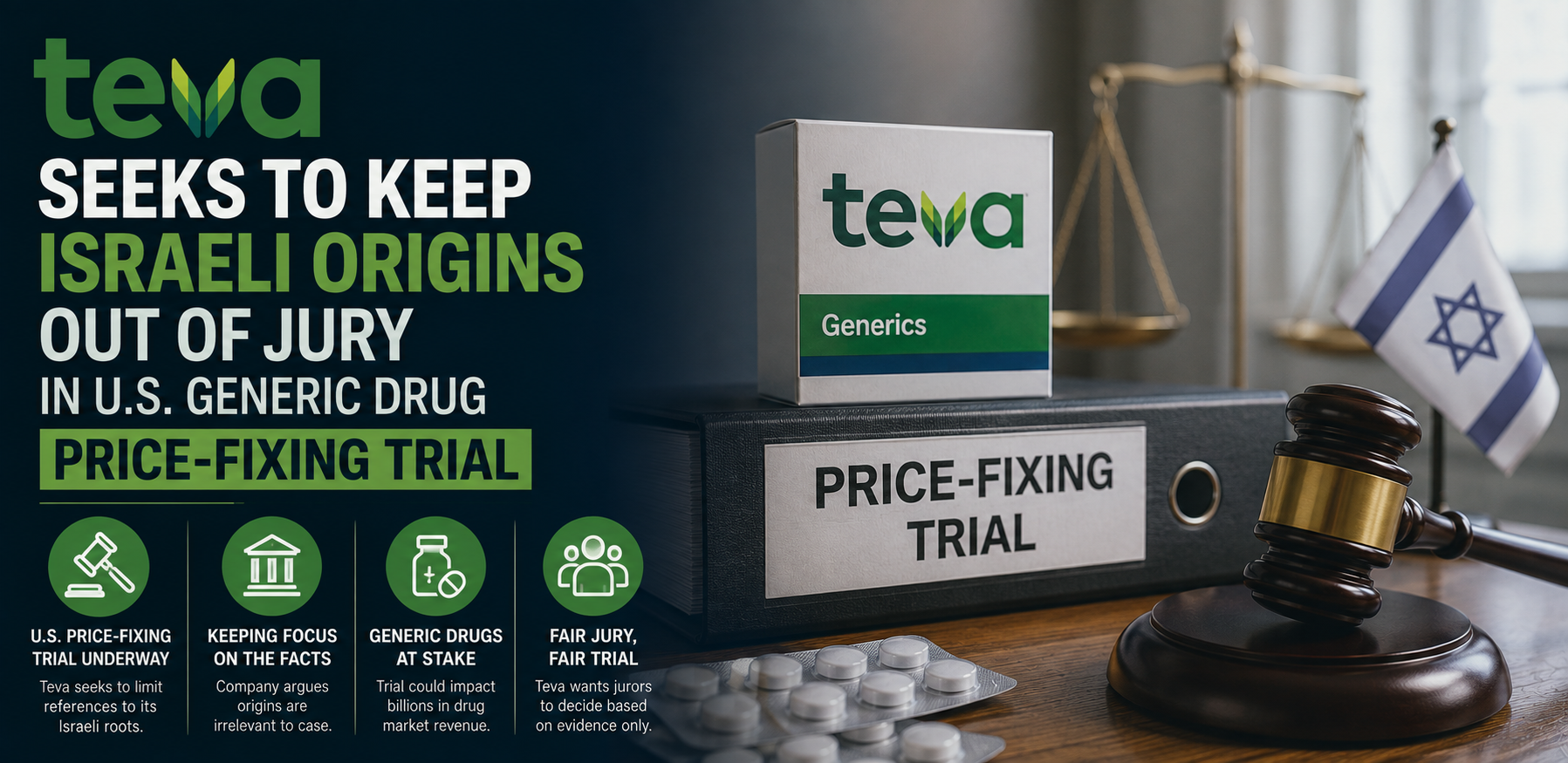
Teva Seeks to Keep Israeli Origins Out of Jury in U.S. Generic Drug Price-Fixing Trial
What's Happening
Teva Pharmaceuticals has asked a U.S. federal judge to prevent jurors from being told that the company is Israeli during an upcoming generic drug price-fixing trial, arguing that its national origin could unfairly influence the proceedings.
The case is one of the first major trials in a long-running lawsuit accusing several generic drug manufacturers of conspiring to inflate the prices of certain medicines sold in the United States. Teva maintains that its Israeli origins have no relevance to the allegations and says mentioning them could create bias among jurors because of strong public opinions surrounding the ongoing conflict in Gaza.
Background on the Lawsuit
The lawsuit centers on allegations that multiple generic drug manufacturers coordinated to keep prices artificially high for certain medications.
The drugs involved include:
- Baclofen, a muscle relaxant.
- Propranolol, a medication used to treat high blood pressure and other cardiovascular conditions.
Teva has denied participating in any conspiracy and intends to defend itself during the trial, which is expected to begin in September 2026.
Why Teva Made the Request
Teva argues that references to its Israeli identity are unrelated to the legal issues the jury must decide.
According to the company, the trial should focus solely on whether it participated in illegal price-fixing rather than on its corporate origins.
Humana, one of the plaintiffs, has separately asked the court to prevent defendants from presenting evidence that could unfairly prejudice jurors against health insurance companies.
Both sides are seeking to limit information they believe could distract jurors from the central legal questions.
Industry Impact
- Pharmaceutical Companies: The trial is one of the first major courtroom tests arising from years of investigations into alleged generic drug price-fixing and could influence future antitrust litigation across the pharmaceutical industry.
- Healthcare Providers: Generic medicines play an important role in reducing healthcare costs, making pricing practices closely watched by providers, insurers, and policymakers.
- Health Insurers: Insurers continue pursuing legal action to recover costs they allege resulted from artificially inflated generic drug prices.
- Investors: The outcome could affect future litigation exposure for pharmaceutical companies facing similar antitrust allegations.
Looking Ahead
The court will decide whether jurors should hear references to Teva's Israeli origins before the trial begins.
The broader price-fixing case is expected to serve as a significant test of the evidence gathered during years of federal and state investigations into generic drug pricing.
Its outcome could influence future settlements and additional antitrust trials involving other pharmaceutical companies.
Why This Matters
Generic medicines help lower healthcare costs for millions of patients, making allegations of price-fixing particularly significant for the U.S. healthcare system.
The case also highlights how courts balance the need for fair trials with concerns that unrelated information could influence juror decision-making.
The trial may shape future pharmaceutical antitrust litigation and competition within the generic drug market.
Key Takeaways
- Teva has asked a U.S. judge to prevent jurors from being told it is an Israeli company during a generic drug price-fixing trial.
- The lawsuit alleges that several drugmakers conspired to inflate prices for certain generic medicines.
- Teva denies the allegations and argues that its national origin is irrelevant to the case.
- The trial is one of the first major proceedings in long-running generic drug antitrust litigation.
- The outcome could influence future pharmaceutical competition and antitrust enforcement.
What This Means for Healthcare Marketers
The upcoming trial highlights continued scrutiny of pharmaceutical pricing, generic drug competition, and antitrust compliance. Pharmaceutical manufacturers, health insurers, healthcare providers, and policy organizations continue monitoring legal developments that could influence drug pricing strategies and market competition. For healthcare marketers, organizations involved in generic pharmaceuticals, market access, healthcare policy, and pharmaceutical compliance represent high-intent opportunities for thought leadership, stakeholder engagement, and commercial strategy.