
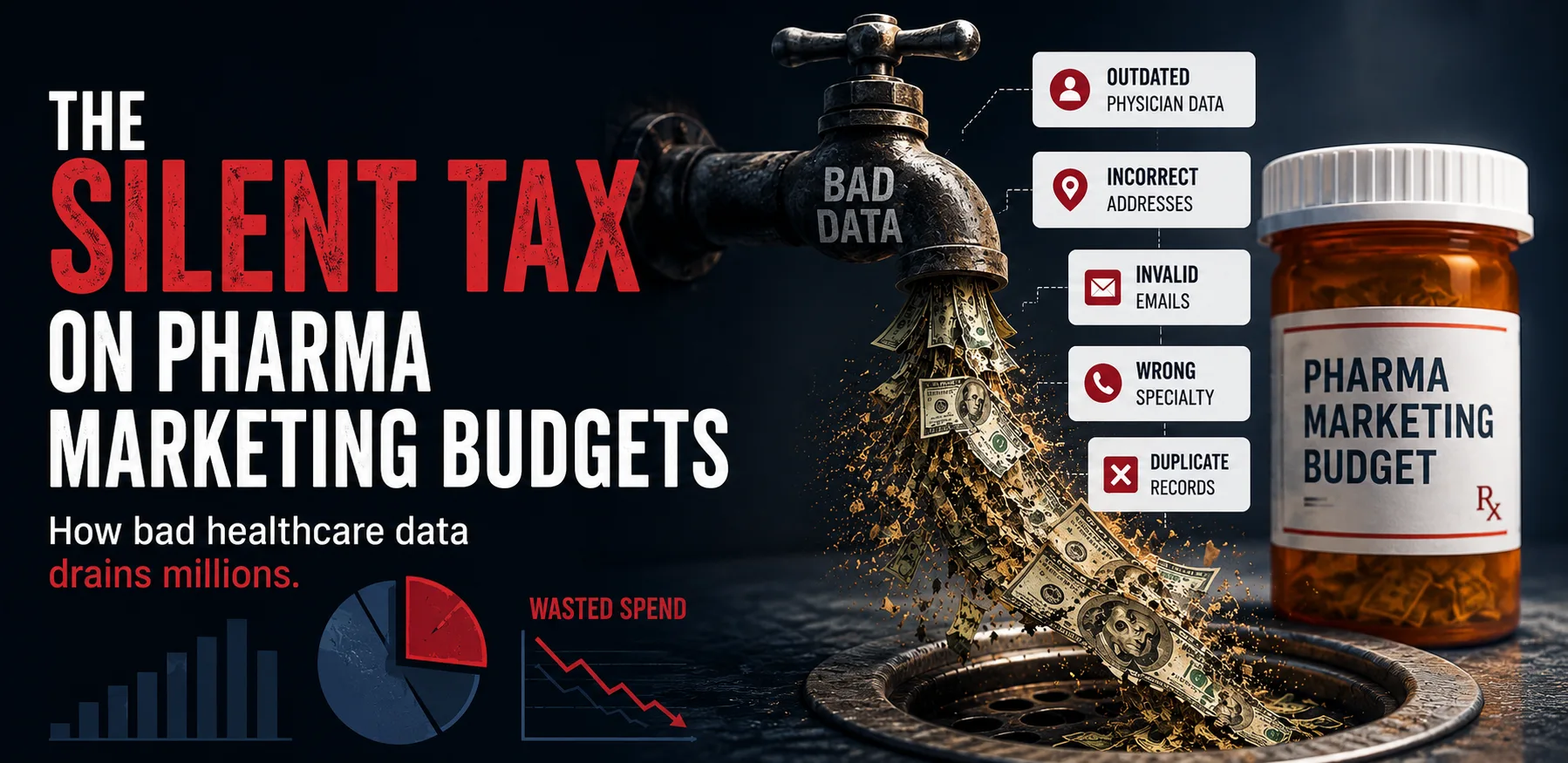
Nobody sends you a bill for this one. That's exactly why it never gets paid down.
Every pharma marketing budget has a line item nobody put there on purpose: a quiet, recurring cost that gets paid automatically, every single campaign, whether or not anyone notices.
It doesn't show up on an invoice. It doesn't get a name in the budget spreadsheet. But it's there, and it behaves less like a mistake and more like a tax.
What makes it a tax, not an accident
A mistake is something you can fix once and move past. A tax is different. It's automatic, it's recurring, and it applies whether or not you remember it exists.
Physician data decay works the same way. Physicians switch practices. Practices merge, relocate, or shut down. NPIs go inactive. None of this is a one-time glitch in your database. It's a constant, low-grade drift that never fully stops, and every campaign you run gets taxed by however much of it has accumulated since the last time anyone checked.
The clock resets the moment you stop looking
Here's the part that catches most teams off guard: fixing your database once doesn't make the tax go away. It just resets the clock.
The day your data hits 95% mailable is the best your database will ever look, because from that moment forward, physicians keep moving and affiliations keep shifting. A one-time cleanup is a snapshot of a database that was accurate on a single day. It says nothing about the day after, or the quarter after that.
Check My Data Free →Two ways to pay the same tax
Every organization pays this tax. The only real choice is how.
Pay it in one lump sum: refresh the database once a year, then find out, campaign after campaign in between, how much has quietly gone stale since the last check. That's how a healthy-looking database turns into a multi-million dollar surprise.
Or pay it continuously: catch the drift in small amounts, as it happens, before it has a chance to compound into a number large enough to make anyone flinch.
Same tax, either way. One version just hides the bill until it's enormous.
The real question isn't whether you're paying it
You are. Every organization running physician outreach is. The only question worth asking is whether you're paying it in small, manageable amounts you barely notice, or in one large, avoidable bill once a year.
Check My Data Free →