
Trump Signs Executive Order Seeking More Flexibility in U.S. Childhood Vaccination Schedule
What's Happening
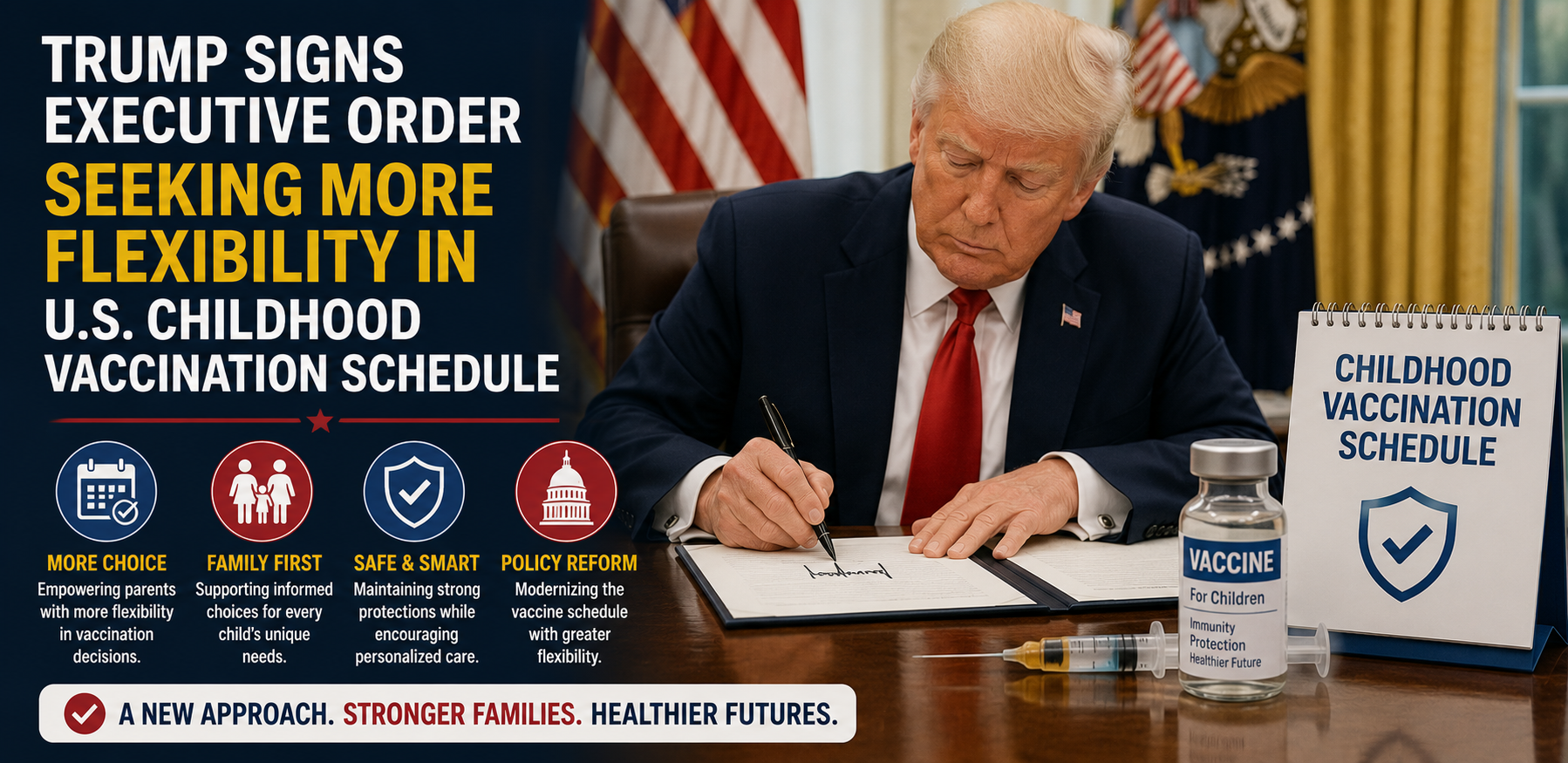
President Donald Trump has signed an executive order directing changes to the U.S. childhood vaccination schedule, reducing the number of federally recommended routine childhood immunizations to 11 core vaccines and calling for the combined measles, mumps, and rubella (MMR) vaccine to be administered as separate shots if feasible.
The order also reaffirms earlier changes made by Health and Human Services Secretary Robert F. Kennedy Jr. to the federal immunization schedule and directs the Department of Justice to challenge certain state vaccination laws that conflict with the administration's policy goals.
The policy marks one of the most significant changes to U.S. childhood vaccination recommendations in decades and has prompted strong reactions from medical organizations, pediatricians, and vaccine manufacturers.
What's Changing
Under the executive order:
- The federal government will recognize 11 core childhood vaccinations.
- The administration recommends separating the combined MMR vaccine into individual measles, mumps, and rubella shots.
- Federal agencies are directed to support greater flexibility in childhood vaccination recommendations.
- The Justice Department will challenge certain state vaccination laws related to school immunization requirements.
The administration says the changes are intended to give parents greater flexibility while aligning U.S. recommendations with some other countries.
Response from the Medical Community
The executive order has drawn criticism from many public health and medical organizations.
Physicians and pediatric groups argue that:
- Current vaccination schedules are supported by decades of scientific evidence.
- Combination vaccines such as MMR are safe and effective.
- Separating vaccines could require additional clinic visits and increase the number of injections children receive.
- Delayed vaccinations may leave children vulnerable to preventable diseases.
Several experts also noted that separate measles, mumps, and rubella vaccines are not currently licensed for routine use in the United States.
Industry Impact
- Healthcare Providers: Pediatricians, family physicians, and health systems may need to adapt clinical workflows and educate families if federal recommendations change.
- Vaccine Manufacturers: Manufacturers could face changes in product demand, vaccine procurement, and future development priorities depending on how the policy is implemented.
- Public Health Agencies: Federal and state agencies may need to update vaccination guidance, educational materials, and immunization programs while addressing differences between federal and state requirements.
- Patients and Families: Parents could face additional decisions regarding vaccine scheduling, while healthcare providers may spend more time discussing immunization options during pediatric visits.
Looking Ahead
Implementation of the executive order will require coordination across multiple federal agencies, and portions of the policy may face legal challenges or additional review.
Healthcare organizations, vaccine manufacturers, and public health officials will closely monitor how the new recommendations affect vaccination programs, public health outcomes, and disease prevention efforts.
Why This Matters
Childhood immunization recommendations influence vaccination practices across healthcare systems, schools, insurers, and public health agencies.
Changes to the federal schedule could affect vaccine delivery, healthcare operations, reimbursement, and public health planning while shaping future discussions about vaccination policy in the United States.
Key Takeaways
- President Trump signed an executive order reducing the federally recognized childhood vaccination schedule to 11 core vaccines.
- The order recommends separating the combined MMR vaccine into individual shots.
- Medical organizations criticized the changes, citing longstanding scientific evidence supporting current vaccination schedules.
- The policy could affect healthcare providers, vaccine manufacturers, and public health agencies nationwide.
- The implementation of the order is expected to face continued legal, regulatory, and operational scrutiny.
What This Means for Healthcare Marketers
The executive order highlights the evolving landscape of U.S. vaccination policy and its potential impact on healthcare delivery, public health programs, and vaccine commercialization. Vaccine manufacturers, healthcare providers, public health agencies, pharmacies, and healthcare technology companies may need to adapt education strategies, clinical workflows, and patient engagement initiatives as federal immunization recommendations evolve. For healthcare marketers, organizations involved in immunization programs, vaccine supply, public health communications, and preventive care represent high-intent opportunities for provider education, stakeholder engagement, and strategic communications.