
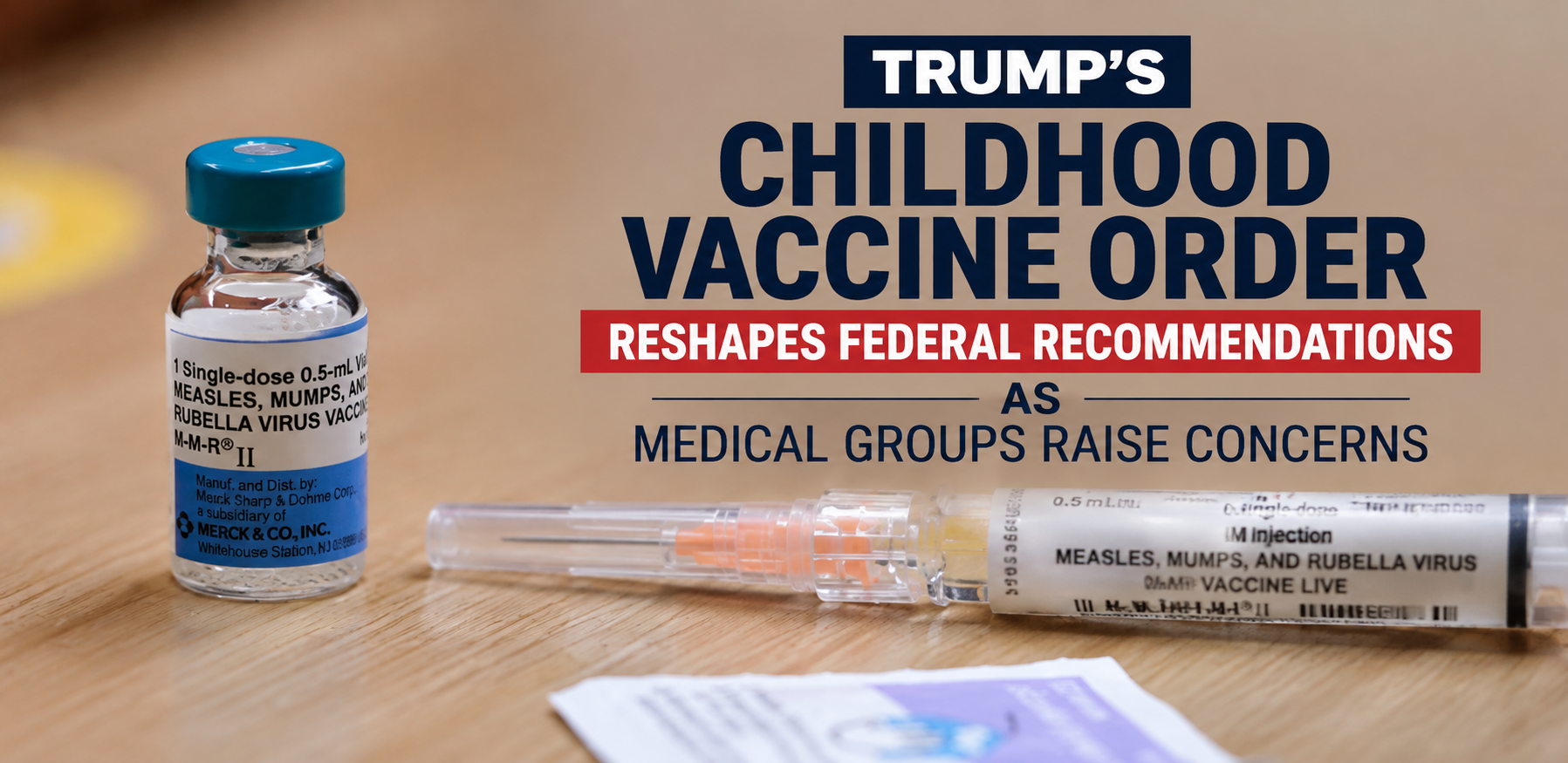
Trump's Childhood Vaccine Order Reshapes Federal Recommendations as Medical Groups Raise Concerns
What's Happening
President Donald Trump has signed an executive order making significant changes to federal childhood vaccination recommendations, reducing the number of universally recommended vaccines from 18 diseases to 11 and directing the Department of Justice to challenge certain state vaccine laws.
The order moves several vaccines, including those for COVID-19, influenza, hepatitis A, hepatitis B, rotavirus, meningococcal disease, and RSV, from universal recommendations to either "high-risk" or "shared clinical decision-making" categories. It also recommends replacing the combined measles, mumps, and rubella (MMR) vaccine with separate shots, although standalone versions are not currently licensed in the United States.
The policy has generated widespread discussion across the healthcare industry, with major physician organizations expressing concern about its potential impact on childhood immunization and public health.
What the Executive Order Does
The executive order includes several major policy changes:
- Recommends routine childhood vaccination against 11 core diseases.
- Moves several vaccines to high-risk or shared clinical decision-making categories.
- Recommends administering measles, mumps, and rubella vaccines separately instead of using the combined MMR vaccine.
- Directs the Department of Justice to challenge certain state vaccination laws involving parental rights, religious exemptions, and medical accommodations.
The administration said the changes are intended to provide parents with greater flexibility when making vaccination decisions.
What Changes for Families
According to the administration, the order does not immediately eliminate access to childhood vaccines.
Key points include:
- The Vaccines for Children program will continue providing vaccines for eligible families.
- Parents can still choose vaccines placed under shared clinical decision-making after consulting with healthcare providers.
- Some private insurers have indicated they will continue covering CDC-recommended vaccines while reviewing the policy.
- Separate measles, mumps, and rubella vaccines are not currently available in the United States, meaning that portion of the order cannot be implemented immediately.
Because school vaccination requirements are established by individual states, the immediate impact on school immunization policies may vary.
Response from the Medical Community
Major medical organizations have criticized the executive order.
Groups including the American Academy of Pediatrics, the Infectious Diseases Society of America, and the National Foundation for Infectious Diseases said current childhood immunization schedules are supported by decades of scientific research and warned that the changes could create confusion, delay vaccinations, and increase the risk of preventable diseases.
Medical experts also noted that replacing the combined MMR vaccine with separate vaccines would not be immediately possible because licensed standalone products are not currently available in the United States.
Industry Impact
- Healthcare Providers: Pediatricians and family physicians may need to spend more time counseling families about changing federal recommendations while continuing to follow applicable state requirements.
- Vaccine Manufacturers: The policy could influence future vaccine demand, product development, and manufacturing priorities if implemented more broadly.
- Public Health Agencies: Federal and state agencies may need to update educational materials and vaccination guidance while addressing differences between federal recommendations and state school requirements.
- Health Insurers: Insurers are evaluating how the revised recommendations may affect preventive care coverage and reimbursement policies.
Looking Ahead
Many elements of the executive order will require additional implementation before taking effect.
Healthcare organizations, vaccine manufacturers, insurers, and state governments are expected to closely monitor legal challenges, regulatory guidance, and future policy changes as the administration moves forward with implementation.
Why This Matters
Federal childhood vaccination recommendations influence preventive healthcare across physician practices, public health programs, insurers, and schools.
Although many practical aspects of vaccination remain unchanged for now, the executive order introduces significant policy changes that could affect healthcare delivery, immunization practices, and public health planning if fully implemented.
Key Takeaways
- President Trump signed an executive order reducing universally recommended childhood vaccines from 18 diseases to 11.
- Several vaccines move to high-risk or shared clinical decision-making categories.
- The order recommends replacing the combined MMR vaccine with separate shots, although standalone vaccines are not currently available in the U.S.
- Major medical organizations have criticized the changes and reaffirmed support for existing immunization schedules.
- Implementation will require additional regulatory action and may face legal challenges.
What This Means for Healthcare Marketers
The executive order highlights evolving U.S. vaccination policy and its potential impact on preventive care, public health programs, healthcare delivery, and vaccine commercialization. Vaccine manufacturers, healthcare providers, pharmacies, health systems, and public health organizations may need to adapt patient education, provider communications, and immunization strategies as federal recommendations evolve. For healthcare marketers, organizations involved in vaccines, preventive medicine, public health, and healthcare policy represent high-intent opportunities for provider education, stakeholder engagement, and strategic communications.