
Trump Nominates White House Adviser Heidi Overton to Lead the FDA
What's Happening
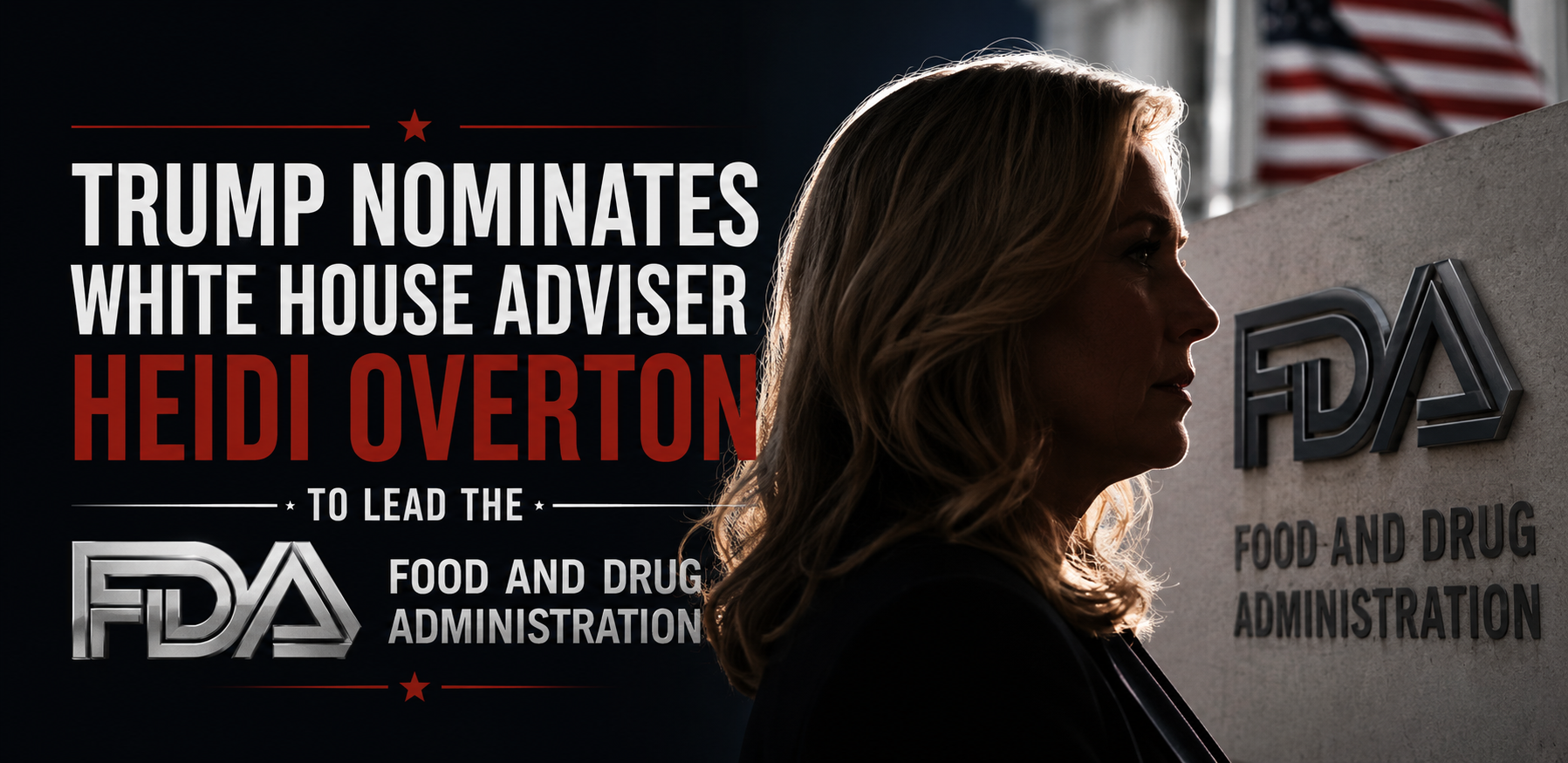
President Donald Trump has nominated Dr. Heidi Overton, deputy director of the White House Domestic Policy Council, to serve as the next commissioner of the U.S. Food and Drug Administration (FDA).
If confirmed by the U.S. Senate, Overton will take over an agency that has experienced significant leadership turnover and staffing losses over the past year. She would replace acting FDA Commissioner Kyle Diamantas, who has led the agency since former Commissioner Marty Makary resigned in May following disagreements with White House officials over drug approvals, flavored e-cigarettes, and abortion pill policy.
Why the Nomination Matters
The FDA is facing several major challenges, including rebuilding after the departure of more than 3,000 employees, restoring confidence among pharmaceutical companies and healthcare stakeholders, overseeing reviews of new drugs, biologics, vaccines, and medical devices, and addressing politically sensitive issues such as vaccine policy, autism research, and abortion medication.
About Heidi Overton
Overton is a physician by training and currently serves as deputy director of the White House Domestic Policy Council. Before joining the White House, she worked at the America First Policy Institute. She recently appeared alongside Trump during the announcement of an executive order calling for major changes to the childhood vaccination schedule, including splitting the combined measles, mumps, and rubella (MMR) vaccine into separate shots.
Industry Reaction
The nomination has drawn mixed reactions. Some analysts expressed concern regarding her limited experience managing a large federal agency. Others worry that continued leadership changes could make it harder for the agency to retain experienced scientific staff and maintain predictable regulatory timelines. The pharmaceutical industry will be watching closely to see whether Overton continues recent efforts to accelerate drug development and regulatory reviews initiated under acting Commissioner Diamantas.
Industry Impact
- Pharmaceutical and Biotechnology Companies: Drug developers rely on the FDA for timely reviews and regulatory guidance. Leadership changes could influence approval timelines, clinical trial policies, and interactions with industry.
- Healthcare Providers: Hospitals and physicians depend on the FDA's decisions regarding the safety and availability of new medicines, vaccines, diagnostics, and medical devices.
- Patients: Any changes in FDA priorities could affect how quickly new therapies reach patients and how the agency approaches public health issues.
- Healthcare Policy: The nomination signals that the Trump administration intends to continue pursuing significant changes in federal health policy through the FDA.
Looking Ahead
Overton's nomination must be confirmed by the U.S. Senate. Lawmakers are expected to question her on her management experience, regulatory priorities, vaccine policy, and plans for rebuilding the FDA workforce.
Why This Matters
The FDA plays a central role in the U.S. healthcare system by regulating prescription drugs, vaccines, biologics, medical devices, and food safety. Leadership changes at the agency can influence the pace of medical innovation, regulatory certainty for the healthcare industry, and public confidence in the nation's primary health regulator.
Key Takeaways
- President Trump nominated Dr. Heidi Overton to lead the FDA.
- The FDA has lost more than 3,000 employees over the past year and is working to rebuild its workforce.
- Overton currently serves as deputy director of the White House Domestic Policy Council.
- Her nomination has prompted debate over her management experience and healthcare policy positions.
- The Senate must confirm her before she can officially become FDA commissioner.
What This Means for Healthcare Marketers
The nomination underscores the FDA's continued influence on pharmaceutical innovation, medical device regulation, and healthcare policy. Pharmaceutical companies, biotechnology firms, medical device manufacturers, regulatory consulting organizations, and healthcare technology providers will closely monitor the agency's leadership transition. For healthcare marketers, organizations involved in regulatory affairs, life sciences, clinical development, and healthcare innovation represent high-intent opportunities for executive engagement, policy education, scientific communications, and strategic partnerships.