What’s Happening
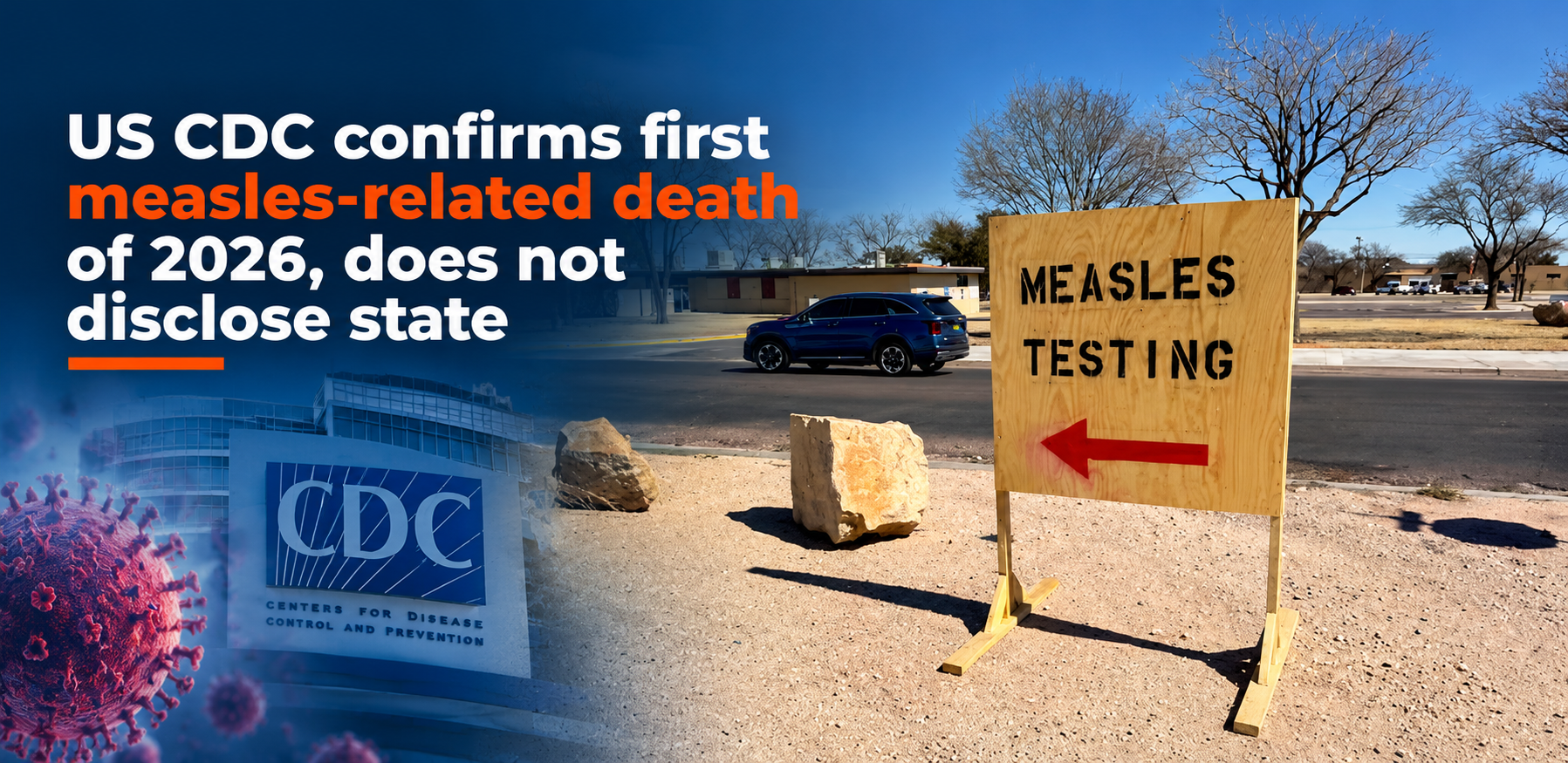
The U.S. Centers for Disease Control and Prevention (CDC) has confirmed the first measles-related death in the United States in 2026.
The death was reported as part of the agency's latest update on the country's measles outbreak.
Measles is a highly contagious viral disease that can cause fever, cough, a runny nose and a widespread rash. In some people, it can lead to serious complications such as pneumonia or inflammation of the brain.
The CDC's confirmation comes as U.S. health officials continue to monitor measles cases and outbreaks across the country.
Why Is Measles a Concern?
Measles spreads extremely easily.
An infected person can spread the virus when they cough, sneeze or breathe. The virus can also remain in the air for a period of time after an infected person leaves an area.
People who have not been vaccinated or who have not previously developed immunity are particularly vulnerable.
Measles can be especially dangerous for young children, pregnant women and people with weakened immune systems.
Although most people recover, serious complications can occur.
Vaccination Is the Main Protection
The measles, mumps and rubella (MMR) vaccine is the primary way to prevent measles.
Two doses of the vaccine provide strong protection against the disease.
When a large proportion of a community is vaccinated, it becomes harder for the virus to spread.
This protection is particularly important for people who cannot receive certain vaccines or who may not develop strong immunity because of medical conditions.
What’s Changing / Business Impact
The confirmed death comes as public health officials continue to deal with measles outbreaks in different parts of the United States.
An increase in measles activity can place additional pressure on:
- Public health departments
- Hospitals
- Pediatric healthcare providers
- Laboratories
- Vaccination programs
- Schools and childcare organizations
Health departments may need to spend more resources identifying cases, tracing contacts and offering vaccinations to people who may have been exposed.
Healthcare providers also need to recognize symptoms quickly because measles can spread rapidly before a diagnosis is confirmed.
Why This Matters
The United States eliminated endemic measles transmission in 2000, meaning the disease was no longer continuously spreading within the country.
However, measles cases can still occur when infected travelers bring the virus into the U.S.
Outbreaks can then develop in communities where vaccination coverage is not high enough to stop transmission.
The CDC's confirmation of a measles-related death highlights the potential severity of the disease and the continuing importance of vaccination and outbreak prevention.
Looking Ahead
Public health officials will continue monitoring measles cases and investigating potential outbreaks.
The CDC and local health departments are also expected to continue encouraging vaccination and working to identify people who may have been exposed to the virus.
Healthcare providers will need to remain alert for symptoms, particularly in areas experiencing outbreaks.
The number of cases and the geographic spread of the disease will be important indicators for public health officials as they plan their response.
What This Means for Healthcare Marketers
For healthcare marketers, an increase in measles activity can create greater demand for public health communication and patient education.
Healthcare organizations may need to communicate more actively about:
- Vaccination
- Measles symptoms
- When to seek medical care
- Exposure and testing
- Preventing transmission
- Community health resources
Healthcare marketers can also monitor outbreak data to understand where public health communication may be most urgently needed.
For pharmaceutical companies, healthcare providers and public health organizations, changes in disease activity can influence patient outreach, educational campaigns, vaccination programs and resource planning.
The broader lesson is that changes in disease activity can quickly create new communication needs across the healthcare system.
Key Takeaways
- The CDC confirmed the first measles-related death in the U.S. in 2026.
- Measles is a highly contagious viral disease that can cause serious complications.
- The MMR vaccine is the primary protection against measles.
- Outbreaks can occur when the virus is brought into communities where vaccination coverage is not high enough to stop transmission.
- Public health departments and healthcare providers may need additional resources to monitor and respond to outbreaks.
- For healthcare marketers, increased measles activity can create new needs for vaccination campaigns, patient education, public health communication and targeted outreach.