
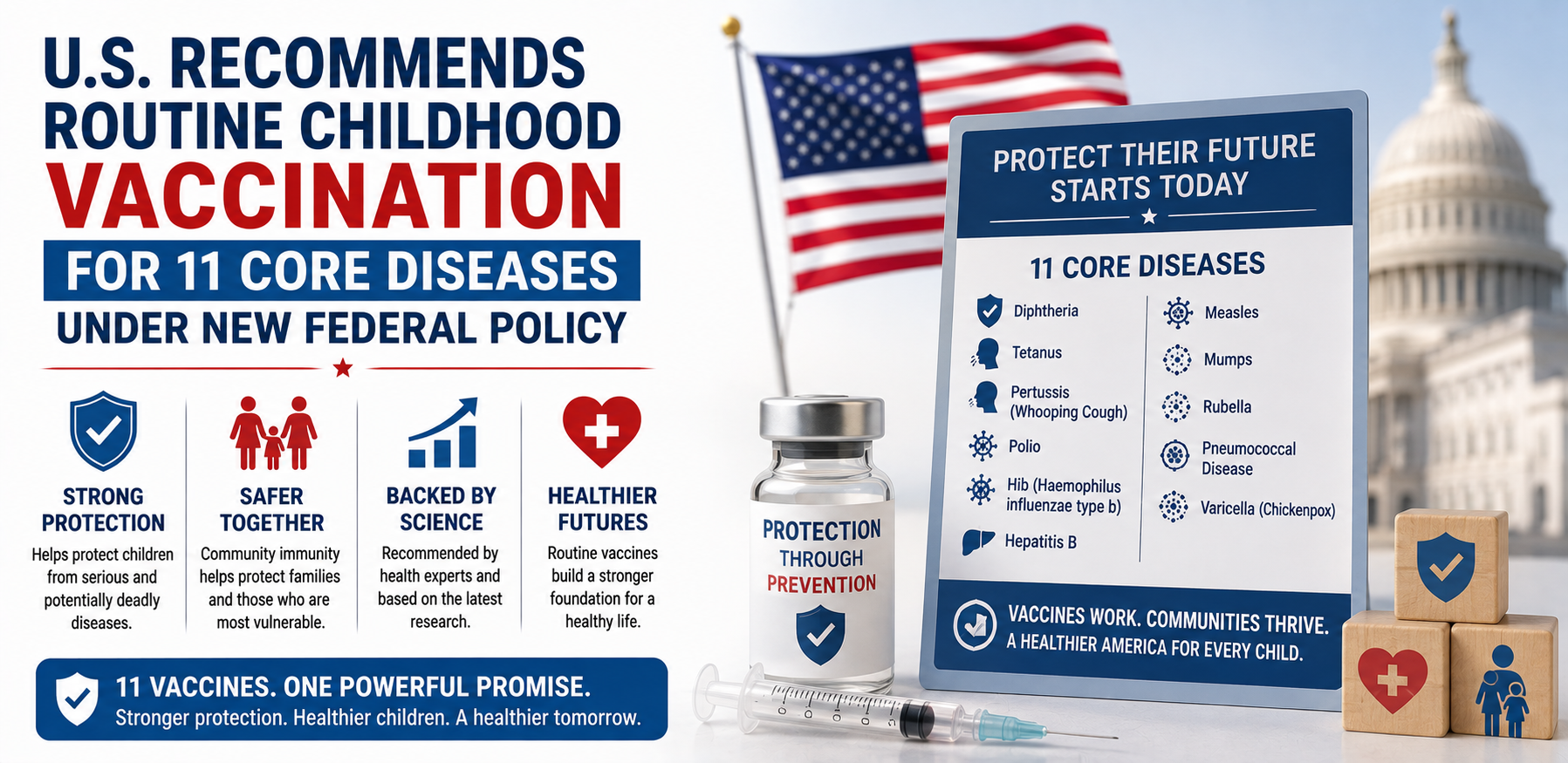
U.S. Recommends Routine Childhood Vaccination for 11 Core Diseases Under New Federal Policy
What's Happening
The Trump administration has announced that the federal government will officially recommend routine childhood vaccination against 11 core diseases, replacing the previous schedule that broadly recommended immunization against a larger number of diseases.
Under the updated recommendations, vaccines for hepatitis B, influenza, and COVID-19 will no longer be universally recommended for all children but instead will be considered through shared clinical decision-making between families and healthcare providers. The administration says the revised recommendations are intended to provide greater flexibility while focusing on what it considers the highest-priority childhood immunizations.
The announcement follows the executive order signed earlier the same day and represents one of the most significant changes to U.S. childhood immunization policy in decades.
What's Changing
Under the new federal recommendations:
- Routine childhood vaccination is recommended for 11 core diseases.
- Some vaccines previously recommended for all children will move to shared clinical decision-making.
- Parents and healthcare providers will have greater flexibility when determining whether certain vaccines are appropriate for individual children.
- Federal agencies will begin aligning guidance with the updated recommendations.
The administration says the revised approach more closely reflects immunization recommendations used in some other developed countries.
Response from the Healthcare Community
The policy has generated significant discussion across the healthcare community.
Many physician organizations and public health experts argue that the previous childhood immunization schedule was supported by decades of clinical evidence and helped protect children from preventable infectious diseases.
Healthcare organizations have also raised questions about how the revised recommendations could affect vaccination rates, clinical workflows, and future public health outcomes.
Industry Impact
- Healthcare Providers: Pediatricians and family physicians may need to update vaccination counseling and clinical workflows while discussing individualized vaccination decisions with families.
- Vaccine Manufacturers: Changes in federal recommendations could influence future vaccine demand, purchasing patterns, and long-term product planning.
- Public Health Agencies: Federal and state agencies may need to revise educational materials, immunization guidance, and public health programs to reflect the updated recommendations.
- Health Insurers: Changes in routine vaccination recommendations could influence preventive care policies and reimbursement practices over time.
Looking Ahead
Federal agencies are expected to begin implementing the updated recommendations while healthcare organizations evaluate their impact on clinical practice.
Medical organizations, healthcare providers, vaccine manufacturers, and public health agencies will continue monitoring vaccination rates and public health outcomes as the new policy is implemented.
Why This Matters
Federal childhood immunization recommendations shape preventive healthcare across physician practices, health systems, insurers, schools, and public health agencies.
Changes to those recommendations can influence vaccine delivery, healthcare operations, reimbursement, and long-term disease prevention strategies throughout the U.S. healthcare system.
Key Takeaways
- The U.S. government now recommends routine childhood vaccination against 11 core diseases.
- Some vaccines previously recommended for all children will move to shared clinical decision-making.
- The policy represents a major change in U.S. childhood immunization recommendations.
- Healthcare providers and public health agencies will need to adapt guidance and clinical practices.
- The changes are expected to influence vaccination policy, preventive care, and public health planning nationwide.
What This Means for Healthcare Marketers
The revised federal recommendations highlight the evolving landscape of immunization policy, preventive care, and public health. Vaccine manufacturers, healthcare providers, pharmacies, health systems, and public health organizations may need to adapt education strategies, patient engagement programs, and clinical communications as vaccination guidance evolves. For healthcare marketers, organizations involved in immunization, preventive medicine, public health, and healthcare policy represent high-intent opportunities for provider education, stakeholder engagement, and strategic communications.