
U.S. Ends Federal Funding for Gender-Affirming Care for Low-Income Minors
What's Happening
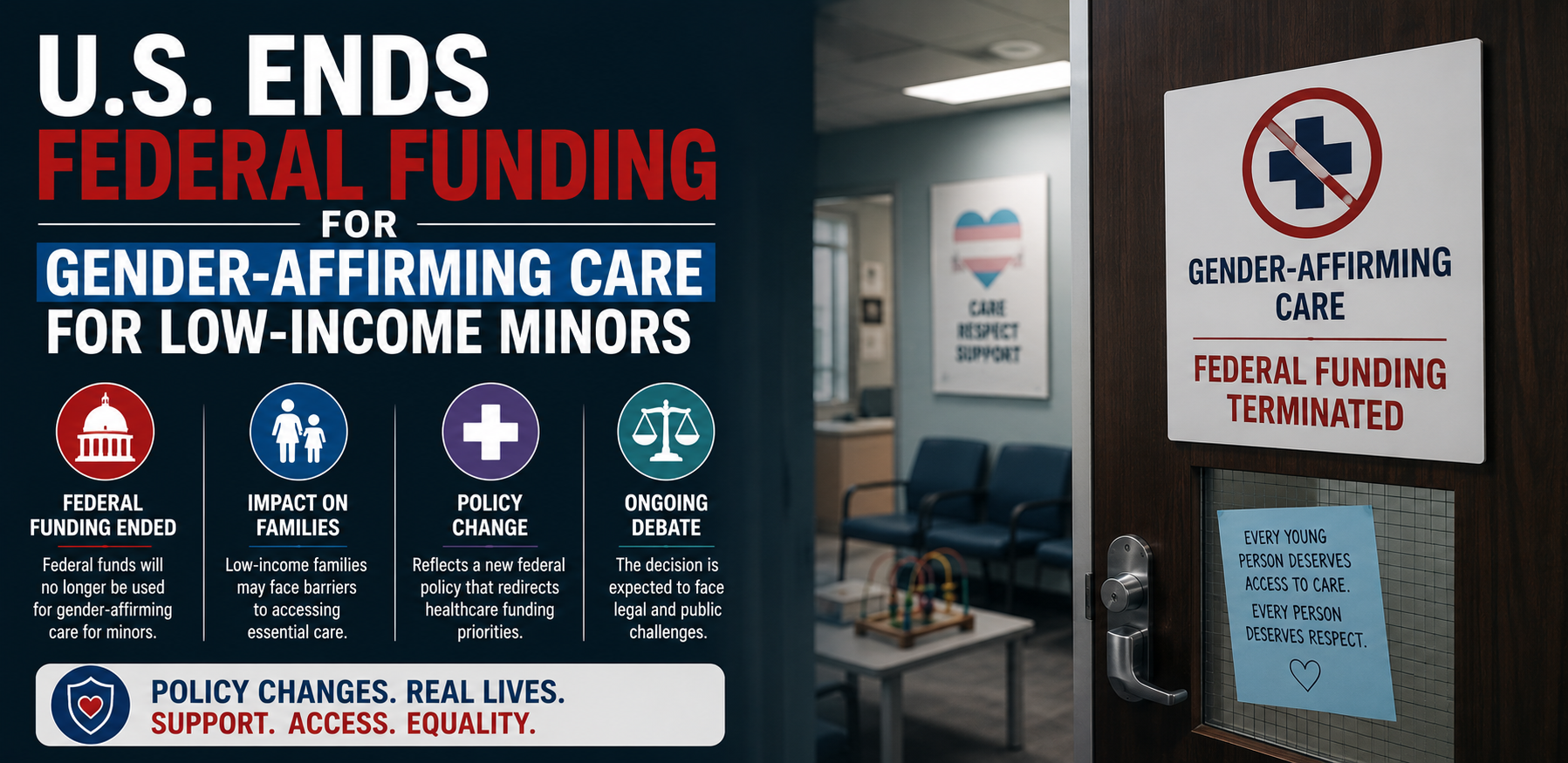
The Trump administration has finalized a rule ending federal Medicaid and Children's Health Insurance Program (CHIP) funding for gender-affirming care for transgender minors, significantly changing access to these services for low-income families across the United States.
Beginning in October 2026, federal Medicaid funding will no longer cover puberty blockers, hormone therapy, or gender-affirming surgeries for individuals under 18, while CHIP will no longer provide federal funding for these treatments for individuals under 19. The rule does not prohibit the procedures themselves but shifts responsibility for funding to states, families, and private insurers.
What's Changing
The new rule affects two of the nation's largest public health insurance programs.
Under the policy:
- Medicaid will no longer receive federal matching funds for gender-affirming care for individuals under 18.
- CHIP will no longer receive federal funding for these services for individuals under 19.
- Puberty blockers, hormone therapy, and gender-affirming surgeries are included in the restriction.
- Mental health services for transgender youth will continue to be covered.
- Children already receiving hormone therapy through Medicaid or CHIP will receive up to six months of continued coverage to help transition off treatment.
Why the Rule Matters
The administration said the policy is intended to protect children and reflects its assessment of the available clinical evidence.
However, the rule has drawn significant opposition from many medical organizations, including the American Academy of Pediatrics and the American Medical Association, which continue to support gender-affirming care when determined appropriate by patients, families, and healthcare professionals. Opponents also argue that the federal government is exceeding its authority by influencing medical standards through funding policy.
Industry Impact
- Healthcare Providers: Hospitals, pediatric specialists, and endocrinology clinics serving Medicaid and CHIP patients may need to adjust treatment pathways and insurance billing processes.
- Health Insurers: States and private insurers may face increased pressure to determine whether and how these services will be covered outside of federal funding.
- Public Health Agencies: State Medicaid programs will need to update coverage policies and prepare for implementation before the rule takes effect.
- Patients and Families: Low-income families seeking gender-affirming care may face higher out-of-pocket costs or reduced access depending on state policies and private insurance coverage.
Looking Ahead
The rule is scheduled to take effect in October 2026 and is expected to face continued legal challenges from states and advocacy organizations.
Healthcare organizations will closely monitor court proceedings and future federal guidance while preparing for implementation. The policy may also influence future discussions around Medicaid coverage, pediatric care, and federal healthcare regulation.
Why This Matters
The policy represents one of the most significant recent changes affecting Medicaid and CHIP coverage for pediatric healthcare services.
Beyond its impact on transgender healthcare, the rule highlights how federal funding decisions can reshape healthcare delivery, insurance coverage, provider operations, and access to care across the U.S. healthcare system.
Key Takeaways
- The Trump administration finalized a rule ending federal Medicaid and CHIP funding for gender-affirming care for low-income minors.
- The policy affects puberty blockers, hormone therapy, and gender-affirming surgeries.
- Mental health services remain covered, and some current patients will receive a temporary transition period.
- The rule shifts funding responsibility to states, families, and private insurers rather than banning the procedures.
- The policy is expected to face ongoing legal and regulatory challenges.
What This Means for Healthcare Marketers
The new rule highlights evolving federal healthcare policy affecting Medicaid, CHIP, pediatric care, and healthcare reimbursement. Health systems, pediatric providers, insurers, healthcare policy organizations, and care management companies will closely monitor implementation and potential legal developments. For healthcare marketers, organizations involved in Medicaid services, healthcare policy, payer strategy, pediatric care, and population health represent high-intent opportunities for provider education, policy communications, stakeholder engagement, and reimbursement support.