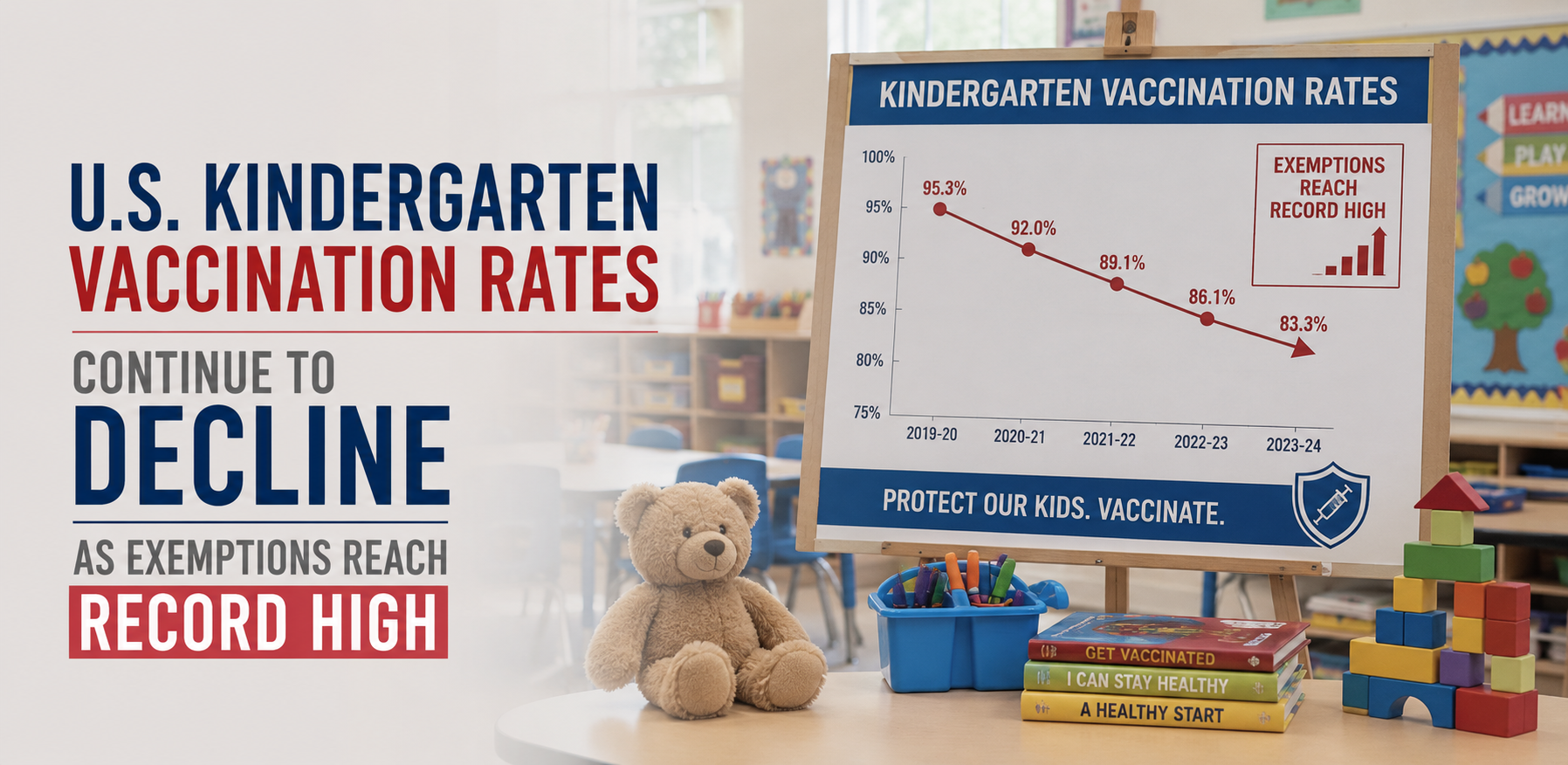
U.S. Kindergarten Vaccination Rates Continue to Decline as Exemptions Reach Record High
What's Happening
Kindergarten vaccination rates in the United States declined again during the 2025–2026 school year, continuing a downward trend that began during the COVID-19 pandemic, according to new data from the U.S. Centers for Disease Control and Prevention (CDC).
National coverage fell by 0.1 percentage point for all major childhood vaccines tracked by the CDC. Coverage ranged from 92.0% for the DTaP vaccine to 92.4% for the MMR (measles, mumps, and rubella) and polio vaccines. At the same time, the percentage of kindergarten students with vaccine exemptions increased to a record 4.2%, with exemptions rising in 41 states and Washington, D.C.
Health officials warn that vaccination rates remain below the 95% threshold generally needed to prevent measles outbreaks, as the country experiences its highest number of measles cases in more than 35 years.
Key Findings
The CDC reported several concerning trends:
- Vaccination coverage declined for all routinely recommended kindergarten vaccines.
- National exemption rates reached an all-time high of 4.2%.
- Twenty-four states now report exemption rates above 5%.
- More than half of U.S. states recorded lower vaccination coverage than the previous school year.
The highest MMR vaccination rates were reported in West Virginia, Connecticut, Maine, New York, and Mississippi. The lowest rates were reported in Idaho, Wisconsin, Minnesota, Utah, and Arizona.
Why Experts Are Concerned
Public health experts say even small declines in vaccination coverage can increase the risk of outbreaks because measles is one of the most contagious infectious diseases. The CDC continues to recommend maintaining at least 95% MMR vaccination coverage to preserve community immunity and reduce the risk of sustained transmission. Experts also noted that the decline comes amid ongoing debates over federal vaccine policy and public confidence in routine childhood immunization.
Industry Impact
- Public Health Agencies: Federal and state health departments may increase vaccination outreach efforts and monitor communities where exemption rates continue to rise.
- Healthcare Providers: Pediatricians and primary care physicians are expected to continue emphasizing routine childhood immunizations during back-to-school visits and educating families about vaccine safety.
- Schools: School districts may face increased challenges managing vaccine compliance and responding to outbreaks in areas with lower immunization coverage.
- Communities: Lower vaccination rates increase the likelihood of localized outbreaks, particularly among children who cannot be vaccinated because of age or medical conditions.
Looking Ahead
The CDC is expected to continue monitoring school vaccination rates while encouraging healthcare providers and public health agencies to improve immunization coverage. With measles cases already at their highest annual level in decades, health officials say reversing the decline in routine childhood vaccinations will be critical to preventing future outbreaks.
Why This Matters
Routine childhood immunization has been one of the most effective public health measures for preventing vaccine-preventable diseases. The continued decline in kindergarten vaccination rates, combined with record-high exemption levels, increases the risk that diseases such as measles could spread more easily in schools and communities unless vaccination coverage improves.
Key Takeaways
- U.S. kindergarten vaccination coverage declined again during the 2025–2026 school year.
- Vaccine exemptions reached a record 4.2% nationwide.
- Vaccination rates remain below the 95% level recommended to prevent measles outbreaks.
- More than half of U.S. states reported lower vaccination coverage than the previous year.
- Public health officials continue urging families to keep children up to date on recommended immunizations.
What This Means for Healthcare Marketers
The CDC's latest data reinforces the importance of immunization programs, preventive care, and public health education. Health systems, pediatric practices, pharmacies, vaccine manufacturers, and public health organizations continue investing in strategies to improve vaccination rates and address vaccine hesitancy. For healthcare marketers, organizations involved in immunization, pediatric care, infectious disease prevention, and population health represent high-intent opportunities for provider education, community outreach, patient engagement, and public health communications.