U.S. Measles Cases Surpass 2,500, Highest Annual Total in More Than 35 Years
What's Happening
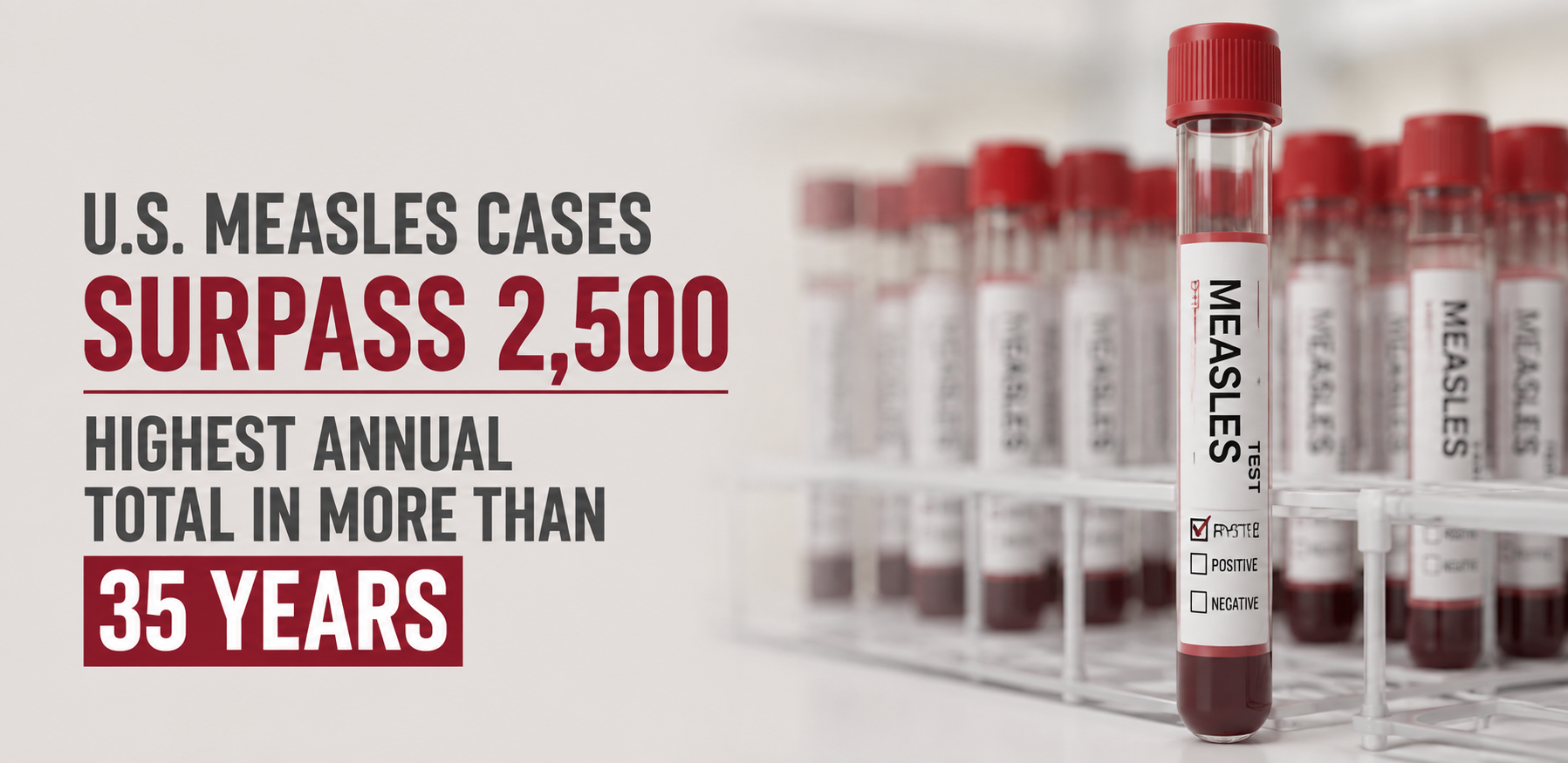
The U.S. Centers for Disease Control and Prevention (CDC) reported 2,566 confirmed measles cases across the country as of August 14, 2026, marking the highest annual total in more than 35 years.
The outbreak has spread across 40 states, with 32 separate outbreaks reported so far this year. Health officials say the surge has been driven largely by declining vaccination rates in some communities, allowing the highly contagious virus to spread more easily among unvaccinated individuals.
Understanding the Outbreak
Measles is one of the world's most contagious viral diseases. It spreads through the air when an infected person coughs or sneezes and can remain in the air for up to two hours.
Common symptoms include:
- High fever.
- Cough.
- Runny nose.
- Red, watery eyes.
- A characteristic red rash that spreads across the body.
Complications can include pneumonia, brain swelling (encephalitis), hospitalization, and, in rare cases, death. Young children, pregnant women, and people with weakened immune systems are at the greatest risk of severe illness.
Why Cases Are Rising
According to the CDC, most reported infections have occurred among people who were unvaccinated or whose vaccination status was unknown. Public health experts say several factors have contributed to the increase:
- Lower childhood vaccination coverage in some communities.
- Localized outbreaks among unvaccinated populations.
- Increased international travel introducing imported cases.
- Rapid transmission because measles is extremely contagious.
Health officials continue to emphasize that the MMR (measles, mumps, and rubella) vaccine remains the safest and most effective way to prevent infection.
Industry Impact
- Public Health Agencies: Federal, state, and local health departments continue investigating outbreaks, conducting contact tracing, and organizing vaccination campaigns to limit further spread.
- Healthcare Providers: Hospitals, pediatricians, and primary care providers remain on alert for suspected measles cases while encouraging routine childhood immunization.
- Schools: School districts may continue enforcing vaccination requirements and exclusion policies during outbreaks to reduce transmission.
- Communities: Areas with lower vaccination coverage remain at the greatest risk for additional outbreaks, prompting increased public health education efforts.
Looking Ahead
The CDC expects additional cases may occur as several outbreaks remain active. Health officials continue urging eligible children and adults to receive the recommended MMR vaccine, noting that maintaining high vaccination coverage is essential to preventing future outbreaks and protecting vulnerable populations.
Why This Matters
Measles was declared eliminated in the United States in 2000, meaning continuous domestic transmission had been interrupted. The record number of cases reported in 2026 highlights how quickly the disease can re-emerge when vaccination coverage declines. The outbreak underscores the continued importance of routine immunization, surveillance, and rapid public health response to prevent widespread transmission.
Key Takeaways
- The CDC has confirmed 2,566 measles cases in the United States in 2026.
- This is the highest annual total in more than 35 years.
- Cases have been reported across 40 states and multiple active outbreaks.
- Most infections have occurred among people who were unvaccinated or had unknown vaccination status.
- Health officials continue to recommend the MMR vaccine as the best protection against measles.
What This Means for Healthcare Marketers
The record measles outbreak highlights the continued importance of immunization, infectious disease surveillance, public health preparedness, and preventive care. Healthcare providers, public health agencies, vaccine manufacturers, pharmacies, and health systems continue investing in vaccination programs, disease monitoring, and community education. For healthcare marketers, organizations involved in vaccines, infectious diseases, population health, and preventive medicine represent high-intent opportunities for provider education, public awareness campaigns, immunization outreach, and healthcare communications.