
U.S. Sues Kansas School District for Aiding Transgender Students’ Transitions
What’s Happening
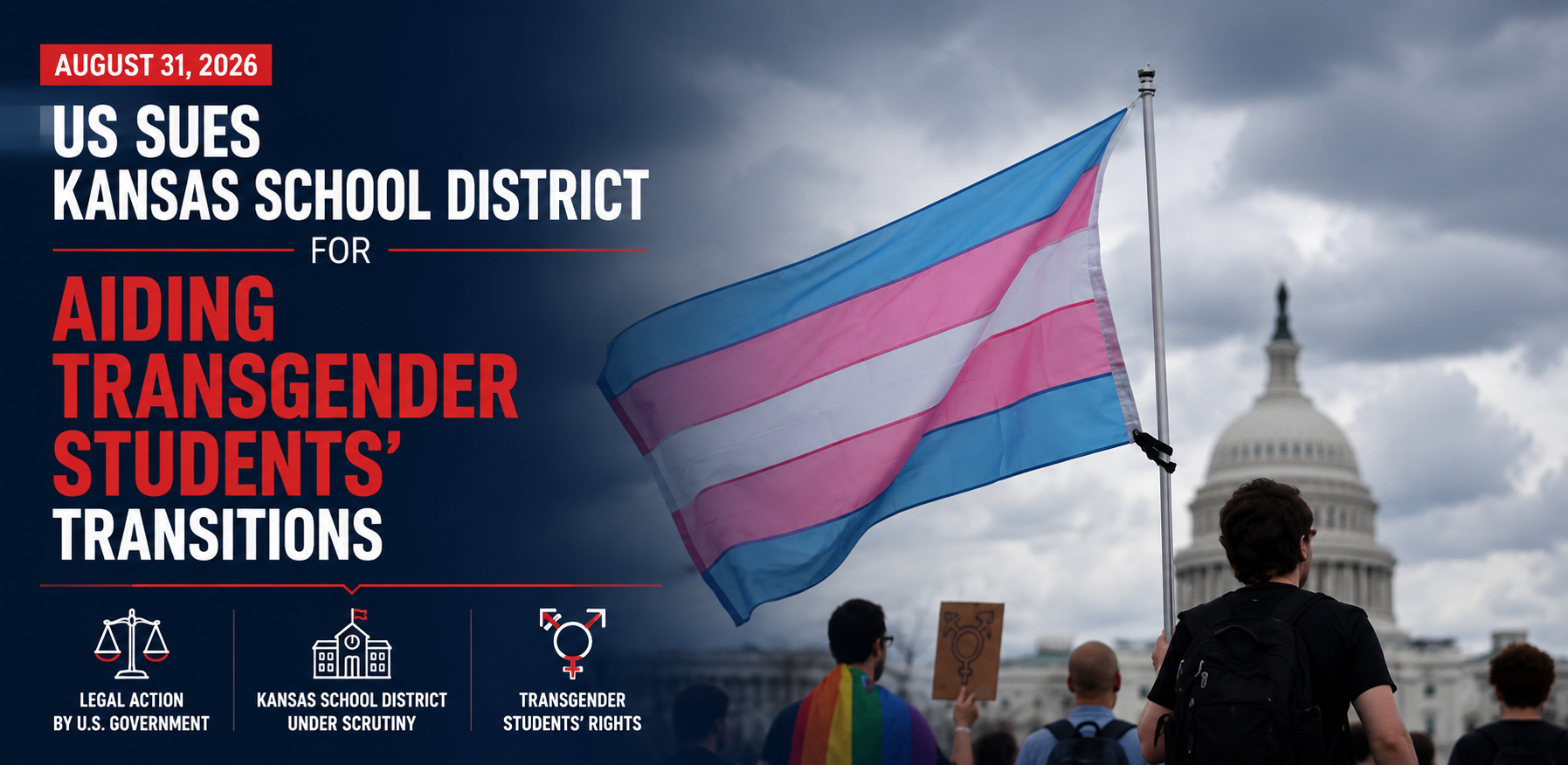
The Trump administration has filed a lawsuit against the Kansas City, Kansas, public school district over policies concerning transgender students, accusing the district of helping students socially transition at school without involving their parents. The U.S. Department of Justice described the case as the first lawsuit of its kind brought by the federal government against a school district over support for transgender students’ transitions. (Reuters)
The lawsuit centers on district guidance that federal officials say allow school staff to help students develop and implement transition plans without parental knowledge or consent. The Justice Department argues that these practices conflict with federal protections governing parents’ access to their children's educational records and requirements for parental consent in certain school evaluations. (Reuters)
The dispute is part of a much broader effort by the Trump administration to restrict transgender-related policies across schools, healthcare and other areas of government.
The Federal Government’s Case Against the District
Allegations involving parental access
The Justice Department argues that the district's approach can prevent parents from learning about significant information involving their children.
Federal officials specifically cited federal laws that prohibit schools from blocking parents' access to their children's records and laws requiring parental consent before schools conduct evaluations that could uncover sensitive information. (MarketScreener)
The government is seeking to stop the district from enforcing the policies it considers unlawful.
What the district's guidelines say
The district's guidance provides a process through which transgender students, or their parents, can meet with school staff to discuss matters such as preferred names, gender and pronouns.
According to reporting on the lawsuit, students can request that parents or guardians be excluded from the planning process. Such requests are considered based on circumstances including the student's age, grade level and welfare. The district also has provisions for students who do not want their transgender or gender-nonconforming status disclosed to their parents. (KCUR)
That approach is at the heart of the federal government's allegation that school personnel are facilitating transitions without parental involvement.
A Dispute Over Whether the Policy Was Formally Adopted
The case also involves a disagreement over the status of the district's transgender-student guidance.
Federal officials point to a 2017 document and to current district practices that they say are substantially similar. The Justice Department acknowledges that the school board did not formally vote to adopt the 2017 document as an official policy.
The district has argued that the document cited by federal officials was a report rather than a formally adopted policy. (KCUR)
That distinction could become important as the legal case develops because the government is challenging the district's actual practices and policies while the district disputes how federal officials have characterized them.
The Fight Could Put Federal Funding at Risk
The lawsuit comes after an extended dispute between the federal government and the Kansas City, Kansas, school district over transgender policies and federal funding.
The district could face the loss of more than $70 million in federal funding, according to local reporting, which represents roughly 16% of its overall budget. (KCUR)
That makes the dispute more than a question about school policy. Federal funding can be an important part of the financial structure of public school systems, so conflicts with federal agencies can create significant operational and budgetary consequences.
Part of a Larger Federal Policy Shift
Broader restrictions on transgender rights
The lawsuit does not stand alone. The Trump administration has pursued a wider policy shift aimed at limiting federal recognition and support for transgender people.
The administration has directed the federal government to recognize only male and female as sexes and has pursued restrictions on gender-affirming medical treatment for minors as well as efforts to eliminate federal funding for such care. (Reuters)
The Justice Department has also sought information from healthcare providers relating to transgender youth who received gender-affirming medical treatment. Several judges have blocked some of those efforts, showing that the administration's policies are already generating significant legal challenges. (Reuters)
Schools are becoming a major battleground
Public schools are increasingly caught between state and federal requirements, parent-rights arguments and policies related to transgender students.
The Kansas case adds a federal enforcement mechanism to that debate. Previously, the administration had threatened school districts with federal funding cuts over transgender-related policies. This lawsuit represents a more direct move to use the courts to challenge a district's practices. (Reuters)
Why This Matters
The case could have implications beyond one Kansas school district.
At its core, the lawsuit raises questions about who has authority over information and decision-making concerning transgender students in public schools: parents, educators, students or federal authorities enforcing federal education laws.
A ruling against the district could encourage similar federal challenges against school systems elsewhere that maintain comparable policies. Conversely, a ruling favoring the district could limit the administration's ability to use federal law to challenge school-based support for transgender students.
For schools, the financial stakes are also substantial because federal funding is part of the leverage being used in the broader policy dispute.
Looking Ahead
The lawsuit will now move through the federal court system, where the district will have an opportunity to challenge the government's interpretation of federal law and the underlying characterization of its policies.
The case is likely to become another test of how far the federal government can go in using federal education requirements and funding conditions to shape local school policies around transgender students.
Its significance could extend well beyond Kansas, particularly if the Justice Department pursues similar cases against other school districts.
Key Takeaways
- The U.S. Justice Department has sued Kansas City, Kansas, public schools over policies supporting transgender students' social transitions.
- The government alleges that school staff can facilitate transition plans without parental involvement and that this conflicts with federal law.
- The district disputes aspects of the government's characterization of its policies, including whether an earlier transgender guideline was ever formally adopted.
- The district could face the loss of more than $70 million in federal funding, or about 16% of its budget.
- The case represents the Trump administration's first Justice Department lawsuit directly targeting a school district for supporting transgender students' transitions.
- The lawsuit is part of a wider federal effort to restrict transgender-related policies in education and healthcare. (MarketScreener)
What This Means for Healthcare Marketers
Although this is primarily an education and civil-rights case, it has implications for the healthcare ecosystem because the administration's broader policy campaign also targets gender-affirming care for minors.
Healthcare organizations, providers and companies operating in this space should expect continued regulatory uncertainty, legal challenges and potential changes in federal funding or information-access requirements. The broader lesson is that policy changes outside healthcare can quickly affect healthcare access, provider behavior, funding and demand, particularly in politically sensitive areas.