U.S. Tightens Travel Rules for Travelers Returning from Ebola-Affected Regions
What's Happening
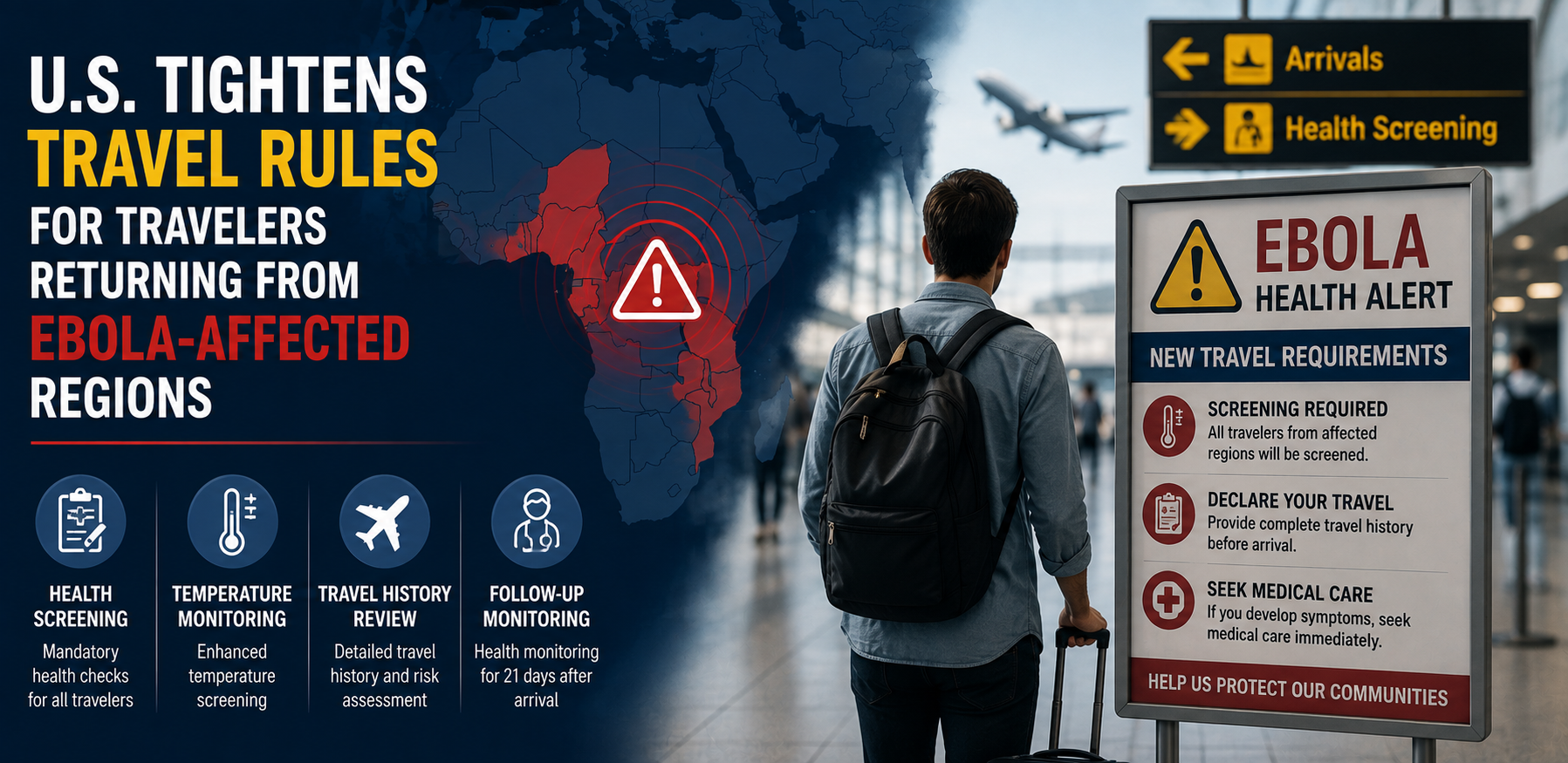
The United States has introduced stricter travel measures for people returning from Ebola-affected regions in an effort to strengthen disease surveillance and reduce the risk of the virus entering the country.
Under the updated policy, travelers arriving from countries experiencing Ebola outbreaks will face enhanced health screening, monitoring, and entry requirements. The measures are intended to help public health officials identify potential cases early while protecting healthcare workers and the broader public from possible transmission.
The new rules are part of the U.S. government's broader strategy to strengthen preparedness for emerging infectious diseases and respond quickly to international public health threats.
Understanding Ebola
Ebola virus disease is a severe viral illness that spreads through direct contact with the blood or bodily fluids of an infected person or contaminated materials.
Symptoms may include:
- Fever.
- Severe headache.
- Muscle pain.
- Weakness.
- Vomiting.
- Diarrhea.
- Bleeding in severe cases.
Although Ebola outbreaks are relatively rare, the disease can spread rapidly if infected individuals are not identified and isolated quickly.
What the New Rules Include
The updated travel measures are designed to improve early detection of potential Ebola cases entering the United States.
Public health measures may include:
- Enhanced airport health screening.
- Health questionnaires.
- Monitoring after arrival.
- Reporting of symptoms.
- Coordination with state and local health departments.
- Additional travel guidance for affected regions.
These precautions are intended to reduce the risk of community transmission while allowing health officials to respond quickly if a case is identified.
Industry Impact
- Public Health Agencies: The updated travel rules strengthen national disease surveillance and improve preparedness for imported infectious diseases.
- Healthcare Providers: Hospitals and clinicians are encouraged to remain alert for patients with recent travel histories from Ebola-affected regions and follow appropriate infection control protocols.
- Airlines and Travel Industry: Airlines and airports may need to support additional screening procedures and provide travelers with updated public health guidance.
- Global Health Organizations: The measures reinforce international collaboration to contain Ebola outbreaks before they spread across borders.
Looking Ahead
Federal health officials will continue monitoring Ebola activity worldwide and may adjust travel recommendations as outbreak conditions evolve.
The United States is also expected to continue supporting international outbreak response efforts while strengthening domestic preparedness through surveillance, laboratory capacity, and emergency response planning.
Future policy changes will depend on the progression of Ebola outbreaks and recommendations from public health authorities.
Why This Matters
International travel can contribute to the spread of infectious diseases, making early detection and monitoring essential components of public health preparedness.
The updated travel measures demonstrate the importance of coordinated border health policies that help reduce the risk of disease importation while supporting rapid identification and response to emerging health threats.
They also reinforce ongoing investment in global health security and pandemic preparedness.
Key Takeaways
- The United States has tightened travel rules for people returning from Ebola-affected regions.
- The updated measures include enhanced screening, monitoring, and public health surveillance.
- The policy aims to identify potential Ebola cases early and reduce the risk of transmission.
- Healthcare providers are encouraged to remain vigilant when evaluating travelers from affected regions.
- The changes reflect continued investment in infectious disease preparedness and global health security.
What This Means for Healthcare Marketers
The updated travel measures highlight continued investment in infectious disease surveillance, border health, diagnostics, and public health preparedness. Government agencies, healthcare providers, diagnostic laboratories, and global health organizations continue strengthening systems that detect and respond to emerging infectious diseases. For healthcare marketers, organizations involved in infectious diseases, public health technology, laboratory diagnostics, epidemiology, and emergency preparedness represent high-intent opportunities for provider education, partnership development, and healthcare innovation.