
Walmart Settles U.S. Government's Opioid Lawsuit for $50 Million
What's Happening
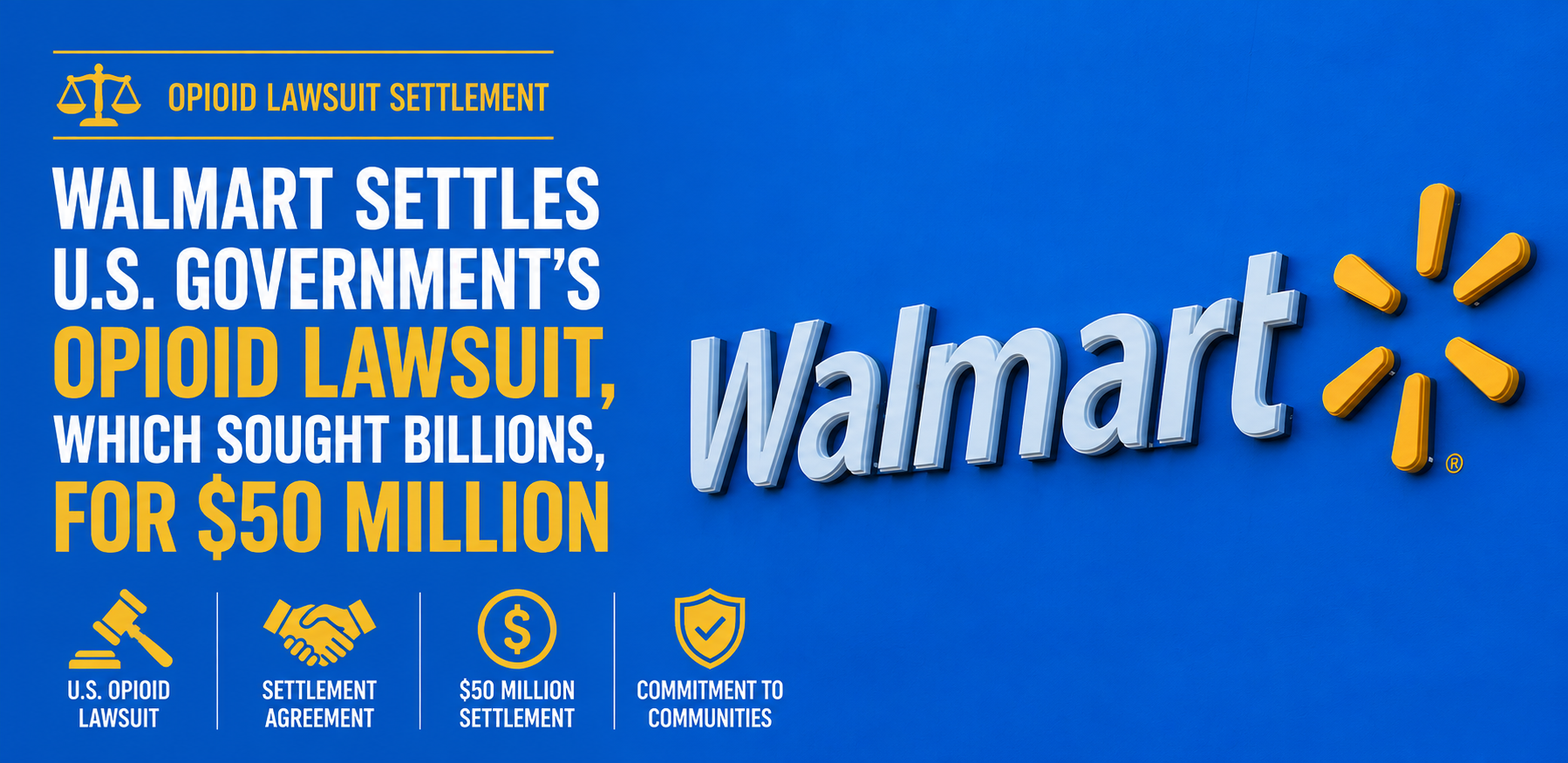
Walmart has agreed to pay $50 million to settle a U.S. government lawsuit accusing the retailer of unlawfully dispensing opioid prescriptions through its pharmacies and contributing to the country's opioid epidemic. (reuters.com)
The settlement is far below the billions of dollars in civil penalties the Justice Department had previously said Walmart could face.
Walmart did not admit liability and described the settlement amount as immaterial in a regulatory filing. (reuters.com)
Our Article: Reuters article
What the Government Alleged
The Justice Department accused Walmart of repeatedly violating the federal Controlled Substances Act since 2013.
The government said Walmart pharmacies failed to respond appropriately to warning signs surrounding suspicious opioid prescriptions.
According to the lawsuit, some Walmart compliance officials knew that certain prescribers were operating what amounted to "pill mills", but pharmacies continued filling prescriptions from those providers. (reuters.com)
The government also alleged that Walmart failed to properly track and report suspicious prescriptions.
What the Settlement Requires
In addition to the $50 million payment, Walmart agreed to tighter oversight of pharmacists.
The settlement also includes a hotline for employees and patients to report suspected illegal dispensing of opioid painkillers. (reuters.com)
The federal case was formally dismissed after the parties filed a joint stipulation in federal court in Wilmington, Delaware.
Why Opioid Dispensing Matters
Prescription opioids can be appropriate for legitimate medical purposes, but inappropriate prescribing and dispensing contributed significantly to the U.S. opioid crisis.
The scale of the crisis remains enormous.
More than 905,000 people in the United States died from opioid overdoses between 1999 and 2025, according to the CDC. Annual opioid deaths began declining after 2022. (reuters.com)
Walmart's Role
Walmart operates one of the largest pharmacy networks in the United States.
Because of that scale, the company's pharmacy practices can have a significant impact on access to controlled substances.
The government's lawsuit focused on whether Walmart's systems adequately identified and responded to suspicious opioid prescriptions.
A Broader Opioid Litigation Landscape
Walmart is not the only major healthcare-related company that has faced legal action over the opioid crisis.
In 2022, Walmart agreed to pay $3.1 billion to settle thousands of lawsuits brought by state and local governments over its pharmacies' role in the opioid crisis.
CVS and Walgreens have also reached much larger settlements related to opioid litigation. (reuters.com)
Other companies targeted over opioids have included:
- Purdue Pharma
- Cencora, formerly AmerisourceBergen
- Other pharmaceutical distributors and manufacturers
What Happened to the Federal Case
The federal government's lawsuit began in December 2020.
In March 2024, a federal judge narrowed the case by dismissing claims that Walmart had failed to report suspicious prescriptions to the DEA and that pharmacists had failed to document certain red flags.
However, claims that Walmart pharmacists dispensed prescriptions that Walmart compliance personnel knew were invalid remained. (reuters.com)
Those remaining claims were resolved through the $50 million settlement.
Impact on Pharmacies
The settlement reinforces the importance of pharmacy systems that can identify potentially inappropriate controlled-substance prescriptions.
Pharmacies need effective processes for:
- Prescription monitoring.
- Identifying suspicious prescribing patterns.
- Pharmacist review.
- Compliance escalation.
- Reporting potential violations.
- Patient and employee reporting.
Impact on Patients
For legitimate patients who rely on opioid medications for pain management, the challenge is balancing appropriate access with preventing misuse and diversion.
Pharmacies therefore play an important role in identifying potentially problematic prescriptions without unnecessarily disrupting legitimate treatment.
Impact on U.S. Public Health
The opioid epidemic remains a major U.S. public-health issue despite recent declines in overdose deaths.
The Walmart settlement highlights the role that pharmacy-level controls and prescription monitoring can play in preventing inappropriate opioid distribution.
It also shows that opioid-related enforcement continues years after the height of the crisis.
Why This Matters
This is a significant U.S. healthcare and public-health story because it involves one of the country's largest pharmacy operators, federal enforcement of controlled-substance laws and the continuing response to the opioid epidemic.
The case also emphasizes that opioid stewardship extends beyond doctors and pharmaceutical manufacturers to retail pharmacies and the systems they use to identify suspicious prescribing and dispensing.
Looking Ahead
Walmart will operate under the settlement's enhanced oversight requirements, including the employee and patient reporting hotline. (reuters.com)
Meanwhile, the broader U.S. healthcare system continues to deal with the long-term effects of the opioid crisis and the challenge of maintaining appropriate access to pain treatment while preventing misuse.
Key Takeaways
- Walmart will pay $50 million to settle a U.S. government opioid lawsuit. (reuters.com)
- The government accused Walmart pharmacies of unlawfully dispensing opioid prescriptions.
- The alleged violations involved failures to recognize and respond to suspicious prescriptions.
- Walmart did not admit liability.
- The settlement requires tighter pharmacist oversight and a hotline for reporting suspected illegal dispensing.
- More than 905,000 Americans died from opioid overdoses between 1999 and 2025. (reuters.com)
- Walmart previously agreed to a separate $3.1 billion settlement in 2022 with state and local governments over its pharmacies' role in the opioid crisis.
- The case demonstrates the continuing importance of pharmacy compliance and opioid-prescribing oversight.
What This Means for Healthcare Marketers
The development is relevant to pharmacy, prescription monitoring, pain management, addiction treatment, behavioral health, healthcare compliance and public health. It also highlights the growing importance of data-driven systems that can identify suspicious prescribing and dispensing patterns while protecting legitimate patient access to controlled medications.