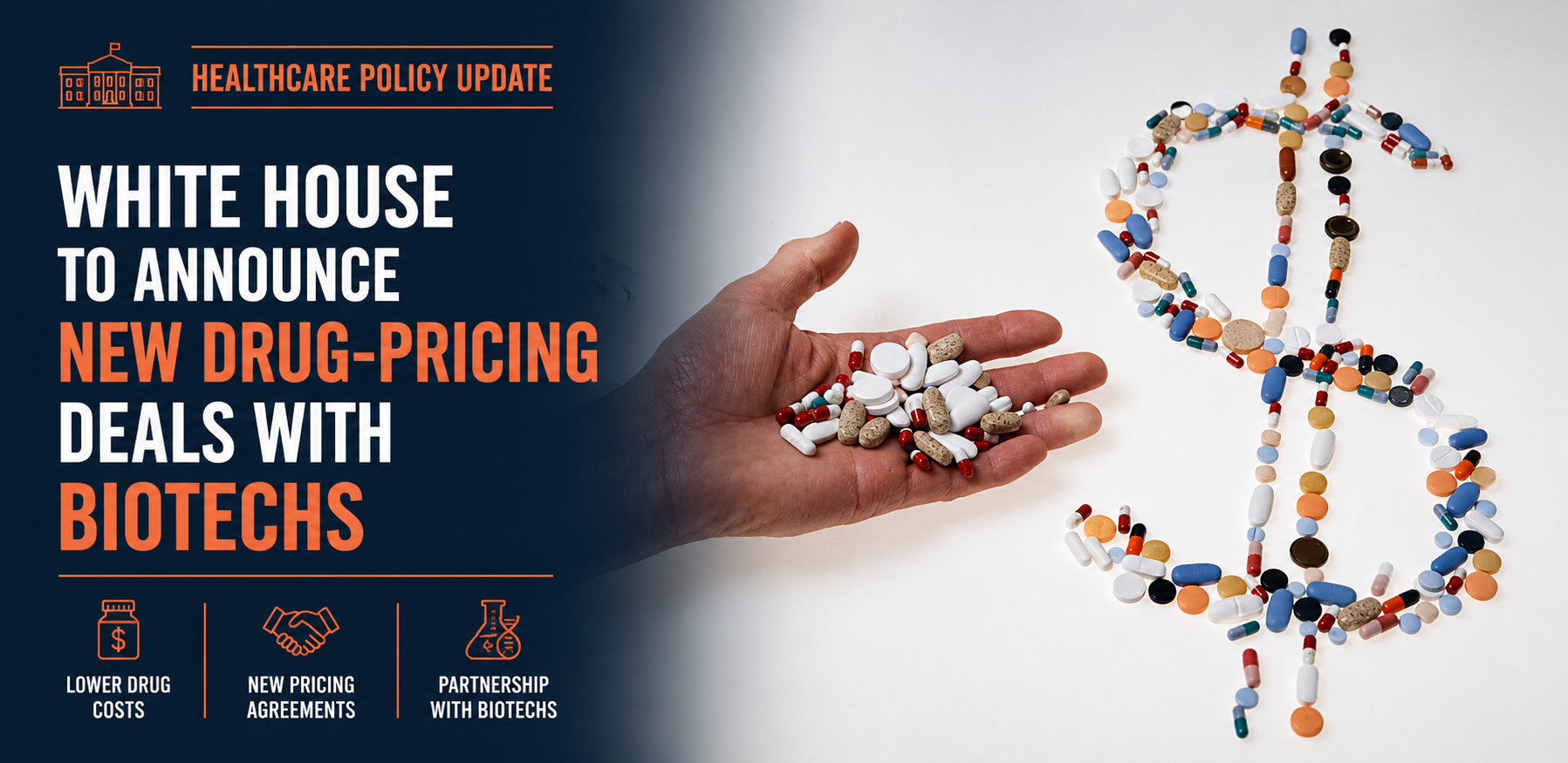
White House to Announce New Drug-Pricing Deals With Biotechs
What's Happening
The Trump administration is planning to announce a new round of voluntary drug-pricing agreements with midsize biotech companies, Bloomberg News reported on August 26.
Under the planned agreements, participating companies would provide discounts on outpatient medicines to state Medicaid programs, bringing the prices paid by those programs closer to what the companies charge in other countries. Reuters said it could not immediately verify the report. (reuters.com)
Our Article: Reuters article
What's Changing
The planned deals would extend the administration's broader most-favored-nation (MFN) drug-pricing strategy, which seeks to bring U.S. drug prices closer to prices paid in other developed countries.
The companies involved have not yet been identified.
So far, the administration has reached voluntary pricing agreements with 17 pharmaceutical companies, including Pfizer, Eli Lilly and Amgen. (reuters.com)
Why It Matters
Prescription medicines are significantly more expensive in the U.S. than in many other developed countries. The administration has therefore been pressuring drugmakers to reduce prices for U.S. patients and government programs.
The voluntary agreements have also included GLP-1 price reductions and expanded Medicare coverage for obesity treatments. (reuters.com)
In May, the administration estimated that its drug-pricing agreements could generate $64.3 billion in federal and state savings over 10 years. (reuters.com)
Impact on Medicaid
The latest proposed agreements specifically target state Medicaid programs.
If implemented, participating drugmakers would offer discounts designed to align Medicaid prices more closely with their international pricing.
For Medicaid, this could reduce government spending on outpatient prescription medicines, although the exact savings from the new agreements are not yet known. (reuters.com)
Impact on Pharmaceutical Companies
For biotech companies, agreeing to lower Medicaid prices could create trade-offs.
Drugmakers could face lower revenue per prescription, but voluntary participation may offer other advantages or regulatory relief as the administration continues developing its broader pricing framework.
The specific terms of the new agreements have not yet been disclosed.
Broader Healthcare Industry Impact
- Pharmaceutical Pricing: The agreements could further shift the U.S. pharmaceutical market toward international reference pricing, putting pressure on manufacturers to justify differences between U.S. and overseas prices.
- Biotech: Midsize biotech companies could increasingly become part of the administration's pricing negotiations, extending the policy beyond the largest pharmaceutical manufacturers.
- Medicaid: Lower outpatient drug prices could potentially reduce spending for state and federal Medicaid programs.
- Patients: The broader goal is to reduce what Americans pay for prescription medicines, although the direct effect on individual patients will depend on the specific drugs and pricing arrangements involved.
Looking Ahead
The administration is expected to announce the new agreements on Monday, according to the Bloomberg report. However, Reuters noted that the report had not been independently verified and that the participating drugmakers had not been identified. (reuters.com)
The development is therefore still planned rather than finalized.
Why This Matters
This is a significant U.S. healthcare industry story because it could affect pharmaceutical pricing, Medicaid spending, biotech companies and access to prescription medicines.
It also signals that the administration's push to tie U.S. drug prices more closely to international prices is expanding to midsize biotechnology companies.
Key Takeaways
- The Trump administration plans a new round of drug-pricing agreements with midsize biotechs.
- Companies would provide discounts on outpatient drugs for state Medicaid programs.
- The prices would be aligned more closely with what companies charge in foreign countries. (reuters.com)
- The companies involved have not yet been identified.
- The administration has already reached voluntary agreements with 17 pharmaceutical companies.
- The broader pricing agreements are projected by the administration to generate $64.3 billion in federal and state savings over 10 years. (reuters.com)
What This Means for Healthcare Marketers
The development is particularly relevant to pharmaceutical pricing, market access, Medicaid, payer strategy and biotech commercialization. As government negotiations increasingly influence drug pricing, manufacturers will need to monitor how pricing policy affects reimbursement, access and commercial strategy across different U.S. payer segments.