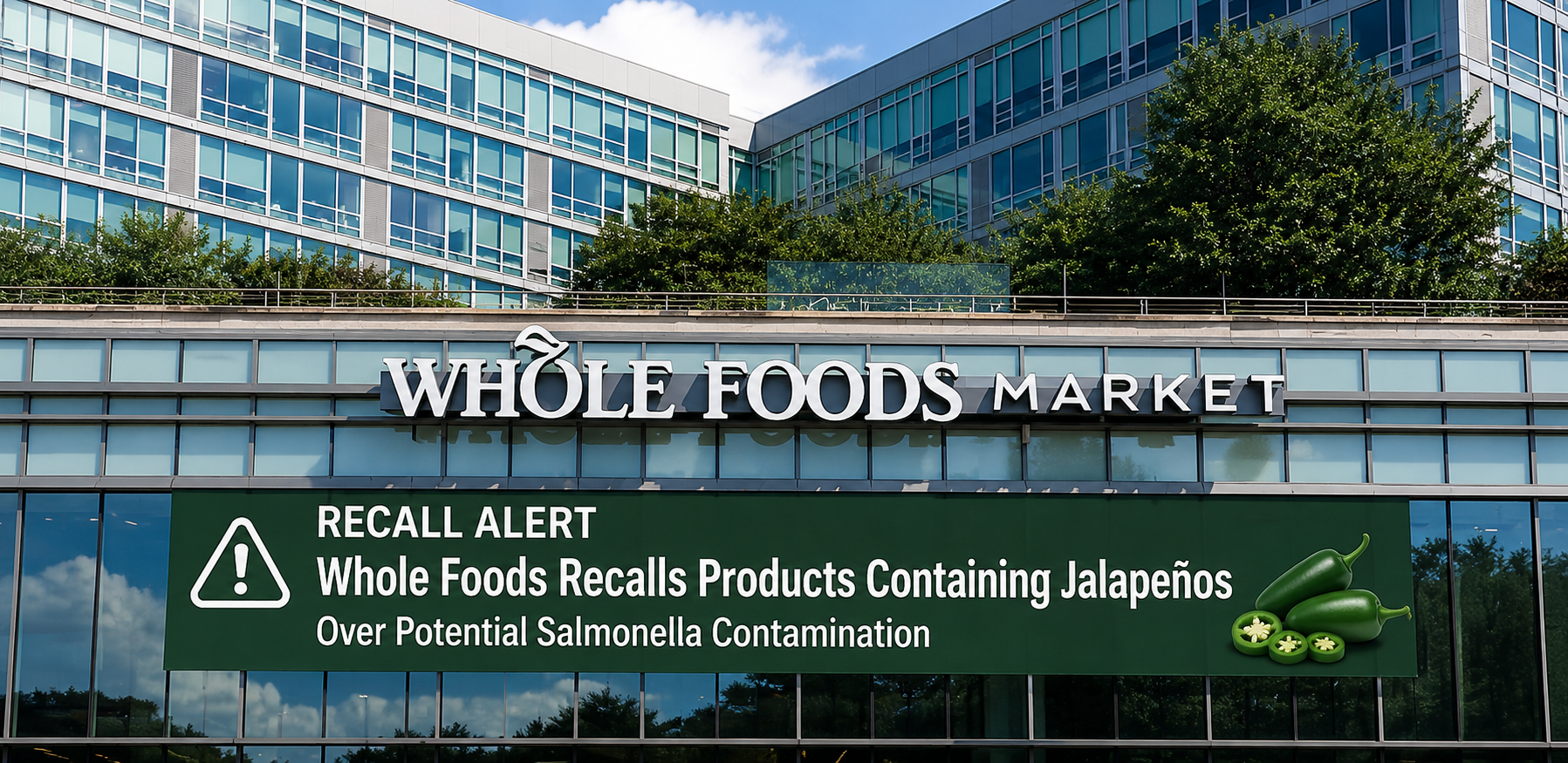
Whole Foods Recalls Products Containing Jalapeños Over Potential Salmonella Contamination
What's Happening
Whole Foods Market has voluntarily recalled select prepared foods and fresh products containing jalapeños because of potential Salmonella contamination linked to an ongoing multistate outbreak in the United States.
The affected products contain jalapeños supplied by Coast Citrus Distributors, whose peppers have been identified by the U.S. Food and Drug Administration (FDA) and the Centers for Disease Control and Prevention (CDC) as the likely source of a nationwide Salmonella outbreak. The recalled items include various salsas, guacamole, pico de gallo, and prepared foods sold in multiple states.
At the time of the recall, no illnesses had been linked directly to the recalled Whole Foods products, although the broader outbreak has sickened 345 people across 27 states, with 36 hospitalizations reported.
Why the Recall Was Issued
The recall was initiated after investigators traced the outbreak to fresh jalapeños supplied by Coast Citrus Distributors.
Whole Foods said it removed all affected products from store shelves and advised customers who purchased the recalled items to:
- Discard the products immediately.
- Avoid consuming them.
- Return them for a refund.
The recall is part of a broader effort to remove potentially contaminated products from the food supply while federal investigators continue tracing the outbreak.
Understanding Salmonella
Salmonella is a bacterial infection that spreads through contaminated food and can cause:
- Diarrhea.
- Fever.
- Stomach cramps.
- Nausea.
- Vomiting.
Symptoms usually develop 6 hours to 6 days after exposure.
Young children, older adults, pregnant women, and people with weakened immune systems face a higher risk of severe illness and hospitalization.
Industry Impact
- Food Retailers: Retailers may face increased product recalls, supplier reviews, and food safety inspections while the investigation continues.
- Food Manufacturers and Suppliers: Produce suppliers are expected to strengthen supplier verification, traceability, and quality control practices to reduce future contamination risks.
- Public Health Agencies: The FDA and CDC continue working with state health departments to identify additional contaminated products and prevent further illnesses.
- Consumers: The recall serves as another reminder for consumers to monitor food safety alerts and follow recall instructions to reduce the risk of foodborne illness.
Looking Ahead
Federal investigators continue examining the outbreak while monitoring for additional illnesses and recalls.
As the investigation progresses, more products could be added to the recall if they are found to contain contaminated jalapeños from the same supplier. The FDA has also recently strengthened food safety guidance for fresh-cut produce to help reduce future outbreaks.
Why This Matters
Large food recalls can have widespread public health and business consequences, particularly when contaminated ingredients are distributed through multiple retailers and manufacturers.
The Whole Foods recall highlights the importance of supply chain traceability, rapid outbreak investigations, and coordinated action between retailers, manufacturers, and public health agencies to protect consumers.
Key Takeaways
- Whole Foods recalled select products containing jalapeños because of potential Salmonella contamination.
- The affected jalapeños were supplied by Coast Citrus Distributors and linked to an ongoing multistate outbreak.
- The broader outbreak has sickened 345 people across 27 states, with 36 hospitalizations reported.
- No illnesses had been directly linked to the recalled Whole Foods products at the time of the announcement.
- Consumers should discard affected products or return them for a refund.
What This Means for Healthcare Marketers
The recall highlights continued investment in food safety, infectious disease surveillance, laboratory diagnostics, and supply chain monitoring. Public health agencies, diagnostic laboratories, food manufacturers, retailers, and food safety technology providers continue strengthening systems that detect contamination and reduce foodborne illness outbreaks. For healthcare marketers, organizations involved in food safety, laboratory testing, public health, epidemiology, and regulatory compliance represent high-intent opportunities for provider education, stakeholder engagement, and healthcare innovation.