
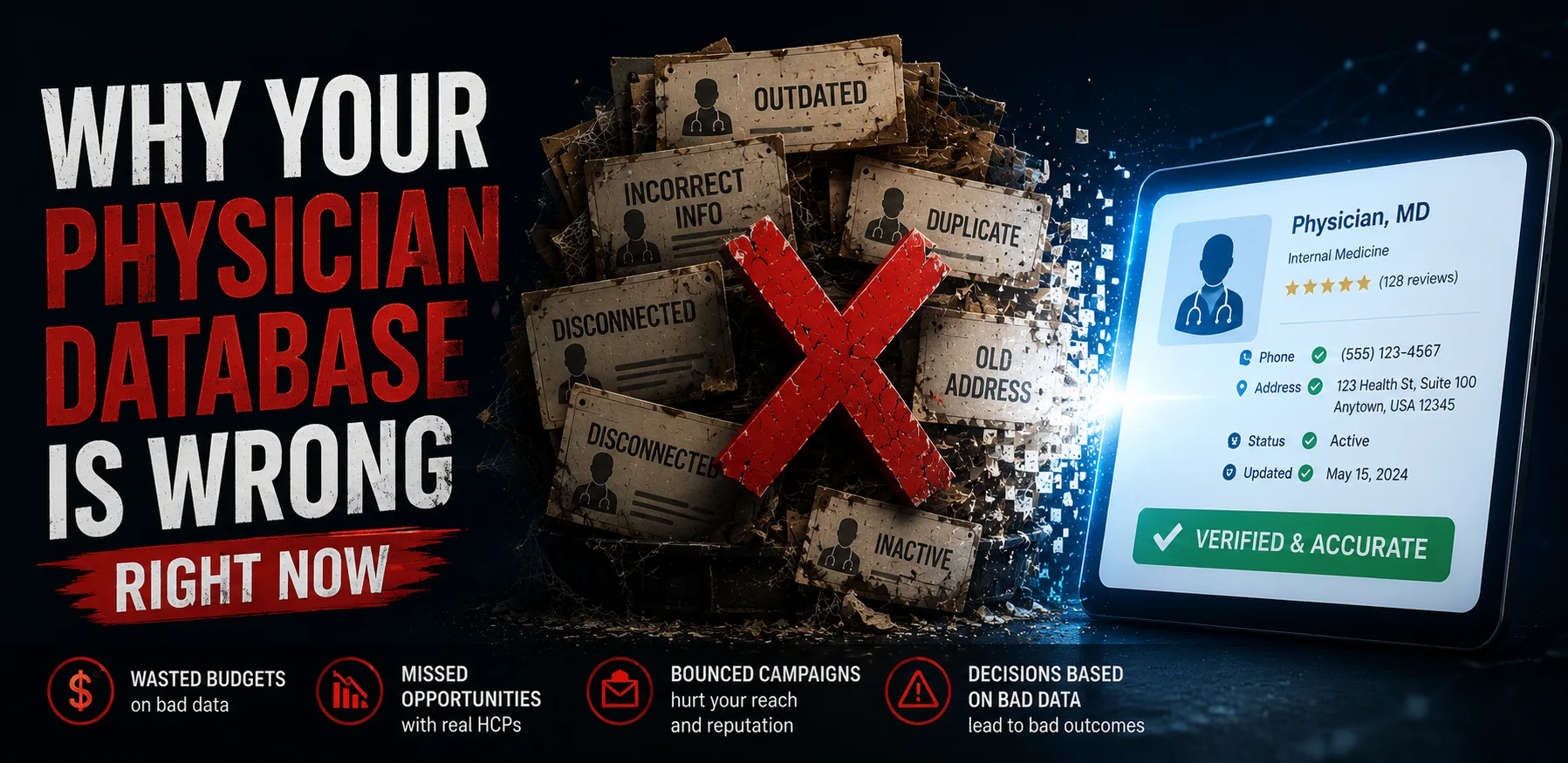
A refresh doesn't capture the present. It captures a moment that's already gone.
Here's an uncomfortable fact: the day you refresh your physician database is the day it's most likely to feel reliable, and also the day the countdown to its next mistake quietly starts.
That's not a flaw in the refresh. It's a flaw in what a refresh actually is.
A refresh is a photograph, not a live feed
A photograph is accurate the instant it's taken. Then the room keeps moving, and the photograph doesn't. Nobody expects a photo from six months ago to show what a room looks like today. Somehow, that's exactly what we expect from a database.
A refresh is the same thing: a single, accurate moment, frozen. The physicians in it don't stop moving practices just because the snapshot was taken. Affiliations don't pause. NPIs don't wait politely for the next refresh cycle before going inactive.
The photograph is already old before you even see it
Here's the part that makes it worse: by the time you're looking at "fresh" data, it was never actually fresh to begin with.
A physician changes practices. Someone has to notice. That gets reported, verified, and published by a data source, each step taking real time. Then it has to flow into your system: imported, mapped, checked. Only then does it show up as "current" data on your screen.
Every one of those steps takes days or weeks. Meanwhile, more physicians are moving and more affiliations are shifting, in real time, the entire time your "fresh" data was travelling toward you.
Check My Data Free →Why this gets worse with scale, not better
On a small list, this lag is a rounding error. On a database of tens of thousands of physicians, it compounds daily. If even a small percentage of records shift every week, a database that was 95% accurate on refresh day can be meaningfully behind by the time your next campaign goes out. Not because anyone did anything wrong, but because the gap between an event happening and your system reflecting it never actually closes. It just gets a fresh countdown timer every time you refresh.
The real fix isn't a better refresh
None of this means refreshes are pointless. It means treating a refresh as a finish line is the actual mistake. The organizations that stay accurate aren't the ones with the best annual refresh. They're the ones that shrink the lag itself, so the gap between something changing in the real world and your database knowing about it is measured in days, not in another year until the next scheduled check.
Check My Data Free →