
Study Finds Wildfires Are Now the Largest Source of Harmful Air Pollution Exposure During U.S. Pregnancies
What's Happening
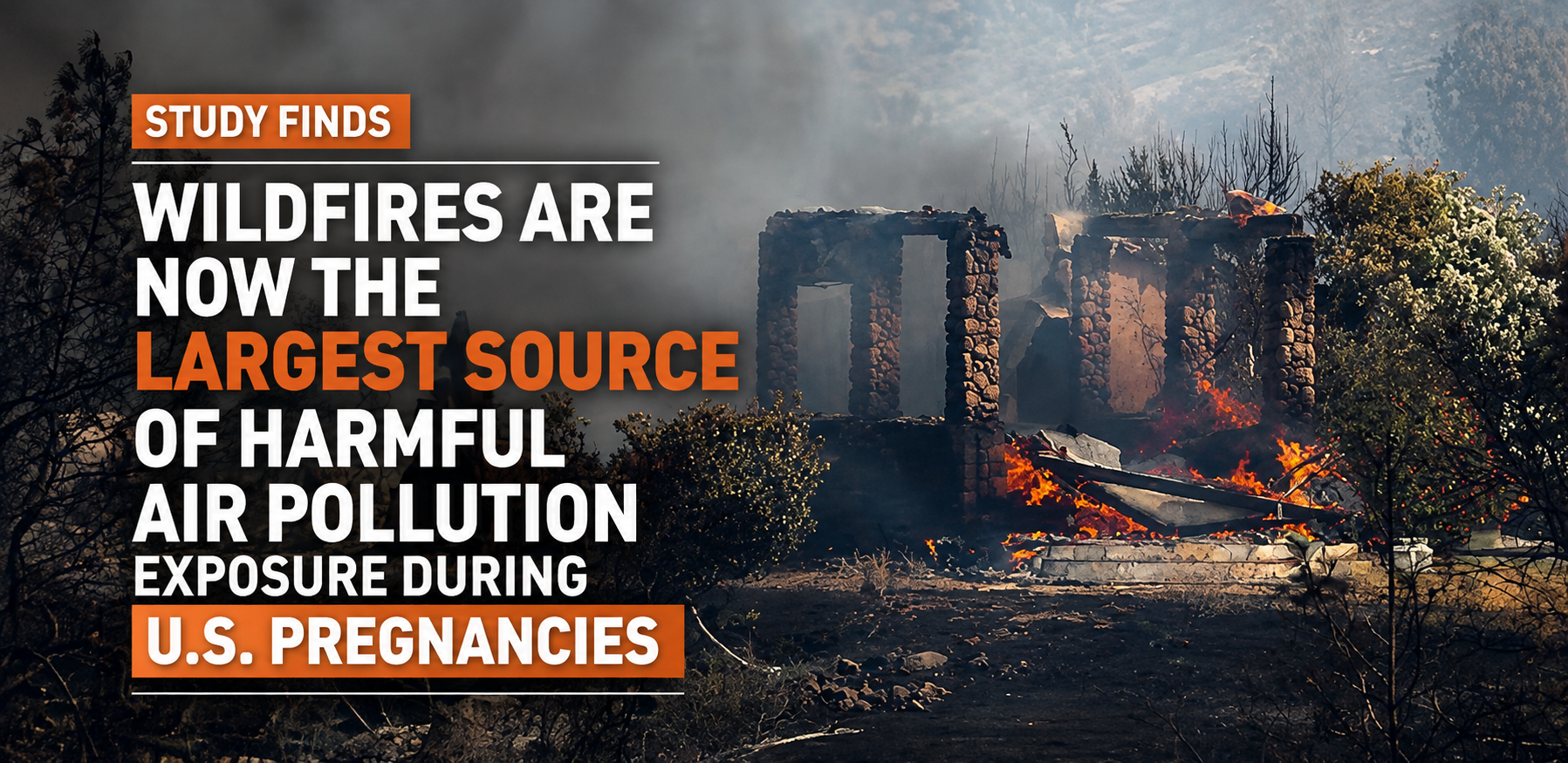
A new U.S. study has found that wildfire smoke has become the leading source of unhealthy air pollution exposure during pregnancy, surpassing pollution from vehicles, factories, and other human-made sources.
Researchers analyzed approximately 64.5 million pregnancies across 48 U.S. states between 2003 and 2019 and found that although overall exposure to fine particulate matter (PM2.5) declined significantly over the study period, the contribution from wildfire smoke more than doubled. By 2019, wildfire smoke accounted for roughly 65% of days when pregnant women were exposed to unhealthy levels of PM2.5 pollution.
Understanding PM2.5 and Pregnancy
PM2.5 refers to tiny airborne particles measuring 2.5 micrometers or smaller.
These particles can:
- Penetrate deep into the lungs.
- Enter the bloodstream.
- Reach the placenta during pregnancy.
Previous research has linked prenatal PM2.5 exposure to:
- Preterm birth.
- Low birth weight.
- Pregnancy complications.
- Adverse infant health outcomes.
While emissions from vehicles and industry have declined over time, increasingly severe wildfire seasons are offsetting many of those air quality improvements.
Key Findings
Researchers observed several important trends:
- Overall prenatal PM2.5 exposure declined between 2003 and 2019.
- Wildfire smoke's contribution to PM2.5 exposure increased from about 3.7% to 8.2%.
- By 2019, wildfire smoke was responsible for approximately 65% of high-pollution days experienced during pregnancy.
- Rural, lower-income, and western U.S. communities experienced some of the greatest wildfire smoke exposure.
The findings suggest that growing wildfire activity is becoming an increasingly important public health challenge for pregnant women.
Industry Impact
- Public Health Agencies: The study highlights the need for improved wildfire preparedness, air quality monitoring, and targeted public health interventions for pregnant populations.
- Healthcare Providers: Obstetricians and maternal health specialists may increasingly counsel pregnant patients about limiting exposure during wildfire smoke events.
- Researchers: The findings support additional research into the long-term effects of wildfire smoke exposure during pregnancy and early childhood.
- Communities: Areas experiencing frequent wildfire smoke may require stronger public health infrastructure, cleaner indoor air initiatives, and improved emergency response planning.
Looking Ahead
Researchers say future wildfire seasons could further increase prenatal smoke exposure as climate conditions continue to fuel larger and more frequent fires.
The findings underscore the importance of expanding air quality monitoring, improving public health alerts, and developing strategies to protect vulnerable populations during wildfire events. Future studies are expected to evaluate whether wildfire smoke exposure has continued to rise after 2019.
Why This Matters
The United States has made substantial progress in reducing pollution from transportation and industry over recent decades.
However, increasing wildfire activity is eroding many of those gains, creating a growing environmental health challenge for pregnant women and unborn children.
The study suggests that protecting maternal and infant health will increasingly require strategies that address wildfire smoke alongside traditional sources of air pollution.
Key Takeaways
- Wildfire smoke is now the largest source of unhealthy air pollution exposure during U.S. pregnancies.
- Researchers analyzed approximately 64.5 million pregnancies across 48 states.
- By 2019, wildfire smoke accounted for about 65% of unhealthy PM2.5 exposure days during pregnancy.
- Rising wildfire activity is offsetting decades of improvements in air quality.
- The findings highlight the need for stronger public health measures to protect pregnant women during wildfire seasons.
What This Means for Healthcare Marketers
The study highlights growing investment in maternal health, environmental health, public health surveillance, and air quality monitoring. Healthcare providers, public health agencies, environmental health organizations, diagnostic laboratories, and digital health companies continue developing strategies to protect vulnerable populations from climate-related health risks. For healthcare marketers, organizations involved in maternal health, environmental health, public health technology, epidemiology, and preventive care represent high-intent opportunities for provider education, community outreach, scientific communications, and population health initiatives.